01Facts
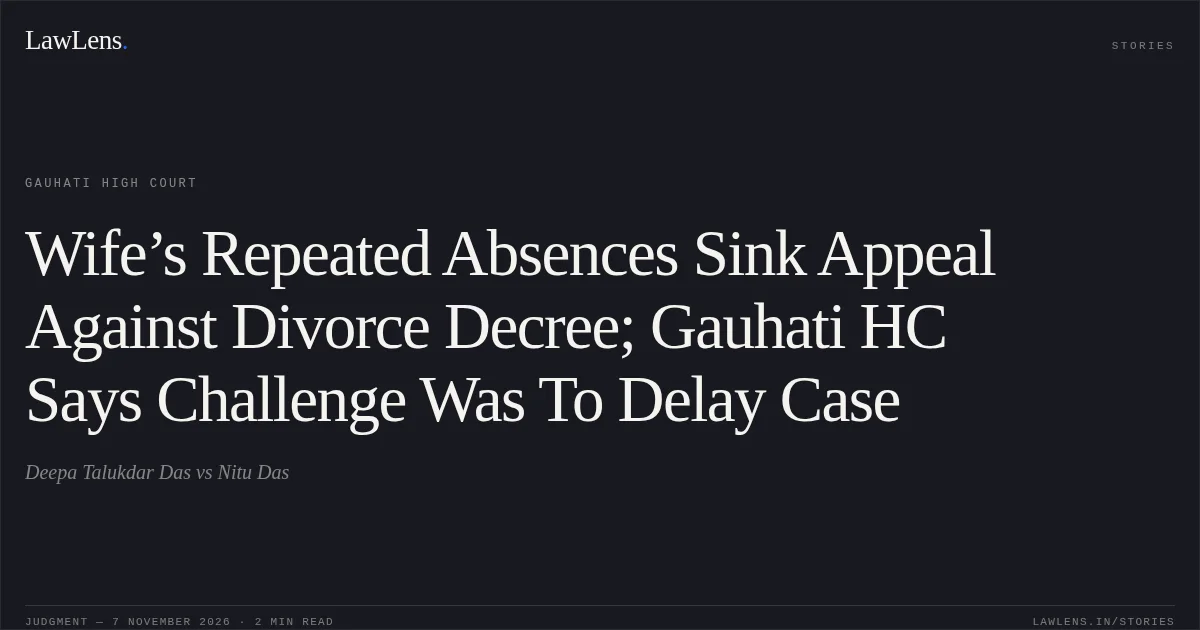
The respondent-husband petitioned for divorce alleging adultery, cruelty and desertion.
¶ 2The Family Court rejected the adultery and desertion grounds but dissolved the marriage under Section 13(1)(ia) of the Hindu Marriage Act, 1955, on the ground of mental cruelty, including the wife’s alleged refusal to cohabit since 2018.
¶ 2–3The wife appealed, arguing that she had been prevented from properly presenting her defence: her evidence and that of two defence witnesses were closed or expunged when they were not available for cross-examination, despite her request for another opportunity.
¶ 4–6The High Court reviewed the Family Court’s order sheets, which recorded repeated absences by the wife and her witnesses, including their non-appearance on the date fixed for cross-examination after an adjournment had been granted.
¶ 9–1202Issues
i.Whether the Family Court’s closure of the wife’s evidence, and its refusal to provide a further opportunity for cross-examination of her witnesses, warranted appellate interference.
¶ 5–6, 9, 12–14ii.Whether the wife had established a basis for setting aside the divorce decree on appeal, in light of her conduct and the proceedings before the Family Court.
¶ 13–1403Law Applied
The divorce decree was made under Section 13(1)(ia) of the Hindu Marriage Act, 1955, which permits dissolution of marriage on the ground of cruelty.
¶ 2The High Court’s decision addressed whether the Family Court’s handling of the wife’s evidence and the resulting decree warranted appellate interference, assessing the procedural history and the wife’s diligence in pursuing her defence.
¶ 9–14The judgment cites no precedent or separate statutory provision governing the closure of evidence or the grant of a further opportunity.
Provisions in the judgment · 1 · Linked ones open on LawLens
Hindu Marriage Act, 1955 Section 13
04Reasoning
The High Court found that the wife had repeatedly been absent, including on the date fixed for cross-examination of her defence witnesses, although an earlier adjournment had been granted on her behalf.
¶ 9, 12It considered that pattern, together with the recorded history of absences, as showing a lack of diligence; it also noted that the wife had expressed willingness to divorce by mutual consent subject to specified financial and property conditions.
¶ 10–13On that record, the Court concluded that the appeal did not disclose a sufficient ground for interference and was intended to delay final disposal.
¶ 1405Holding
The High Court dismissed the appeal and declined to interfere with the Family Court’s judgment dissolving the marriage under Section 13(1)(ia) of the Hindu Marriage Act, 1955.
¶ 2, 14It directed that the trial court record be sent back.
¶ 15Original Court PDF
Deepa Talukdar DasvsNitu Das
Click to open original judgment
Original judgment, available to read, download and summarize on LawLens.in