Facts
Respondent No. 2 alleged that, after purchasing a flat through a SARFAESI auction and beginning repairs, the petitioner and others entered the property, obstructed the work, abused her and the workers, and threatened them with dire consequences. She also alleged threatening telephone calls and interference with her possession
Source reference: paras. 5–8, pp. 3–4The parties had competing claims concerning the property and the works; the petitioner had lodged a complaint asserting that the complainant’s alterations were unauthorised
Source reference: paras. 13–14, pp. 17–18Following the complainant’s complaint and police investigation, a charge sheet was filed for offences under Sections 504 and 506 IPC. The petitioner sought to quash the proceedings and the Magistrate’s cognizance order
Source reference: paras. 4, 1, pp. 2, 17Issues
1. Whether the allegations and investigation material disclosed a prima facie case under Section 506 IPC, read with Section 503 IPC, sufficient to resist quashing
Source reference: paras. 16–17, pp. 18–192. Whether the allegations of abuse and the surrounding circumstances disclosed a prima facie case under Section 504 IPC
Source reference: paras. 18–20, pp. 19–203. Whether the property dispute and the petitioner’s rival complaint established mala fides or otherwise warranted quashing under the principles in Bhajan Lal
Source reference: paras. 21–22, pp. 21–22Law Applied
Section 503 IPC defines criminal intimidation as a threat of injury made with the intent to cause alarm or compel a person to act or omit an act; Section 506 IPC prescribes its punishment
Source reference: para. 16, p. 18; para. 9.1, pp. 5–6Section 504 IPC requires intentional insult accompanied by an intention or knowledge that the insult is likely to provoke a breach of the peace or another offence; mere abuse or rudeness is insufficient, and the words and context are relevant
Source reference: paras. 18–20, pp. 19–20; para. 9.1, pp. 7–8Under Section 482 CrPC, the Court may quash proceedings where recognised grounds—including failure of the allegations to disclose an offence or proceedings manifestly attended by mala fides—are established, applying State of Haryana v. Bhajan Lal, 1992 Supp (1) SCC 335.
Source reference: paras. 15, 22, pp. 18–22Mohd. Wajid v. State of U.P., (2023) 20 SCC 219, explains the ingredients of Sections 503 and 504 IPC and requires careful scrutiny of allegations while cautioning against a mini-trial at the quashing stage
Source reference: paras. 15, 18, 22, pp. 18–22Reasoning
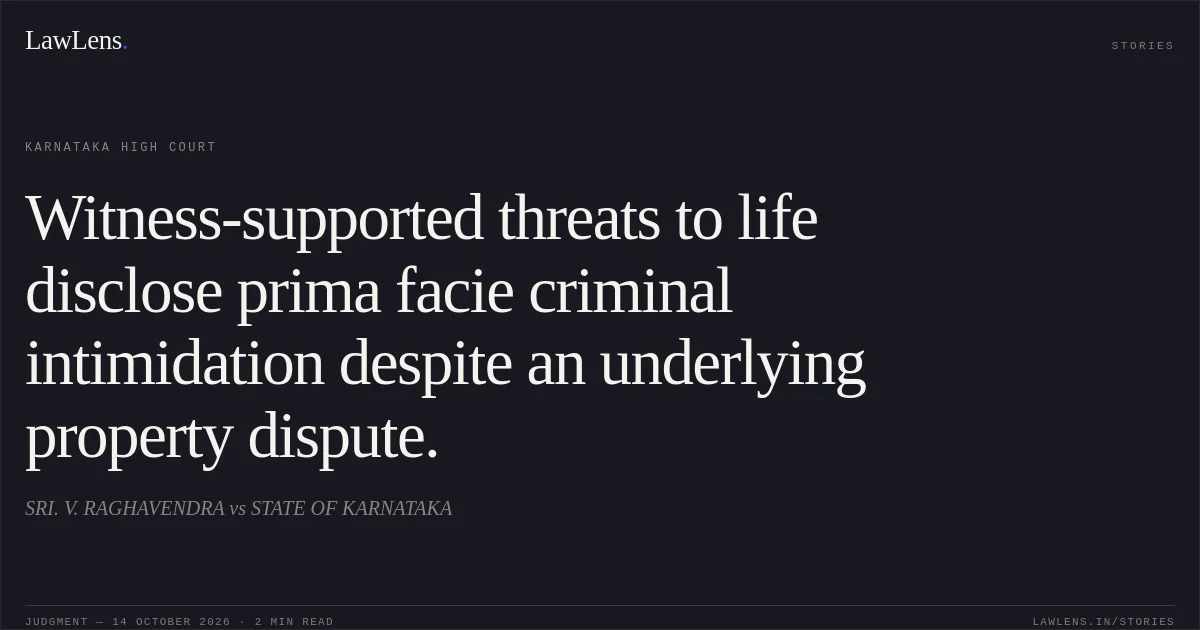
The Court treated the alleged threats to the complainant and workers, including threats of harm to her life, together with the witness statements supporting the allegations, as disclosing a prima facie case under Section 506 IPC; intention to cause alarm and the truth of the allegations were matters for trial
Source reference: paras. 16–17, pp. 18–19For Section 504 IPC, although the Court recognised that the prosecution must establish intentional insult and the requisite intention or knowledge, it considered the alleged abuse during a direct confrontation, supported by witness statements, sufficient to leave the issue for trial rather than quash the charge
Source reference: paras. 18–20, pp. 19–20The existing property dispute and rival complaint did not, without more, establish fabrication or mala fides, and the Court declined to assess witness credibility or determine disputed facts at this stage
Source reference: paras. 21–23, pp. 21–22Holding
The Court held that the material did not warrant quashing the proceedings under Sections 504 and 506 IPC and dismissed the criminal petition
It reserved the petitioner’s liberty to raise all available defences before the trial court, whose independent assessment of the evidence was not to be influenced by the High Court’s observations
Source reference: paras. 24–25, p. 23Acts & Sections Cited
10 provisions across 3 statutes referred to in this judgment. Each provision opens on LawLens.
Indian Penal Code, 18606
Code of Criminal Procedure, 19733
Bharatiya Nagarik Suraksha Sanhita, 20231
Original Court PDF
SRI. V. RAGHAVENDRAvsSTATE OF KARNATAKA
Click to open original judgment
Original judgment, available to read, download and summarize on LawLens.in