Facts
The Petitioner, a financial creditor of Three C Shelters Pvt. Ltd. ("Three C"), filed a writ petition seeking to correct company master data on the Ministry of Corporate Affairs (MCA) portal and for an investigation into alleged fraud
Source reference: p. 2Corporate Insolvency Resolution Process (CIRP) had been initiated against Three C but was later set aside by the NCLAT due to alleged collusion; however, the Supreme Court subsequently stayed that order and revived the CIRP
Source reference: p. 3-9On 22.10.2024, the High Court passed an interim order allowing the Interim Resolution Professional (IRP) to take control of and potentially liquidate certain assets, including a Nehru Place property and units in the "Ace Palms Floors" project
Source reference: p. 5-9Third-party applicants (Bright Buildtech, Lavender, and various security owners) moved applications to recall the 22.10.2024 order, arguing they were never heard, the properties were not owned by the Corporate Debtor, and the Court lacked jurisdiction under Article 226 given the pending CIRP and PMLA proceedings
Source reference: p. 10-18Issues
1. Whether the reliefs sought in the writ petition regarding the modification of master data and investigation into fraud survive in light of subsequent developments and alternative remedies.
Source reference: p. 26, 28-292. Whether the interim order dated 22.10.2024, which authorized the IRP to take over and liquidate third-party assets, should be recalled due to violations of natural justice and the availability of efficacious alternative remedies.
Source reference: p. 34-35Law Applied
The Court applied the discretionary principle of "alternative efficacious remedy" under Article 226 of the Constitution, as established in Radha Krishan Industries v. State of H.P. and Ambika Traders v. Commr., which dictates that writ jurisdiction should generally not be exercised when statutory remedies (such as the IBC, PMLA, or Companies Act) are available.
Source reference: p. 32-34The Court further relied on the principle of audi alteram partem (natural justice), holding that orders affecting third-party property rights cannot be passed without hearing them.
Source reference: p. 35The Court applied the doctrine from Mangal Rajendra Kamthe v. Tahsildar, Purandhar and State of Orissa v. Madan Gopal Rungta, which mandates that interim relief cannot be granted or extended if the Court declines to entertain the main petition on merits.
Source reference: p. 35-37Reasoning
The Court noted that the primary prayers regarding MCA master data were satisfied by the Respondent's compliance affidavit and previous orders.
Source reference: p. 27-28Regarding the fraud investigation, the Court observed that the Petitioner himself moved an application (CM APPL. 7700/2026) stating that reliefs were effectively addressed by the Supreme Court’s oversight of the restitution process.
Source reference: p. 28-29The Court reasoned that since CIRP had been revived by the Supreme Court, the NCLT was the proper forum to adjudicate asset ownership and siphoning claims under the IBC.
Source reference: p. 34The Enforcement Directorate had already attached the disputed properties under the PMLA, providing a specific statutory framework for investigation.
Source reference: p. 21, 31The Court found the interim order of 22.10.2024 legally unsustainable because the affected third parties (applicants) were not impleaded or heard.
Source reference: p. 35Following the Madan Gopal Rungta precedent, the Court held that it could not continue interim protections once it decided that the writ petition itself should be disposed of in favor of alternative statutory forums.
Source reference: p. 35-38Holding
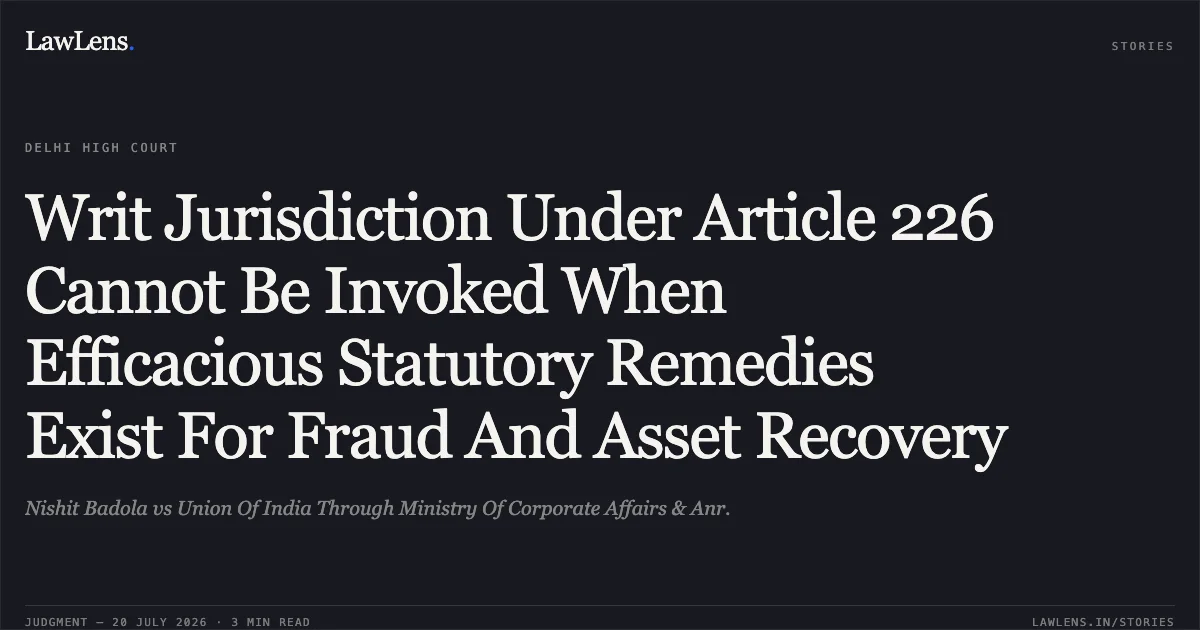
The Court disposed of the writ petition, holding that the Petitioner has equally efficacious remedies under the IBC, PMLA, and Companies Act, 2013.
The Court clarified that since the main petition was not being adjudicated on merits, the interim order dated 22.10.2024 must be vacated. The Court granted liberty to the parties to pursue their claims before the NCLT, PMLA Court, or other competent authorities. All miscellaneous applications for impleadment or staying auctions were disposed of as infructuous.
Source reference: p. 39-40Acts & Sections Cited
14 provisions across 3 statutes referred to in this judgment. Each provision opens on LawLens.
Insolvency and Bankruptcy Code, 2016.5
Companies Act, 20136
Code of Civil Procedure, 19083
Original Court PDF
Nishit BadolavsUnion Of India Through Ministry Of Corporate Affairs & Anr.
Click to open original judgment
Original judgment, available to read, download and summarize on LawLens.in


