Facts
The petitioner was arrested on 13.10.2024 in Ankleshwar, Gujarat, in connection with FIR No. 455/2024 under the Narcotic Drugs and Psychotropic Substances Act, 1985 (NDPS Act).
Source reference: p. 1-2The petitioner sought regular bail under Section 483 of the BNSS 2023, primarily challenging the legality of his arrest on the ground that the "grounds of arrest" were never supplied to him in writing.
Source reference: para. 7The arrest memo merely recorded "reasons for arrest" in a template format rather than person-specific grounds.
Source reference: para. 8, 29.1Transit remand was obtained in Gujarat on 14.10.2024, and police custody remand was granted in Delhi on 16.10.2024; however, the petitioner alleged he was not served with written grounds at least two hours prior to these productions.
Source reference: para. 10, 22Issues
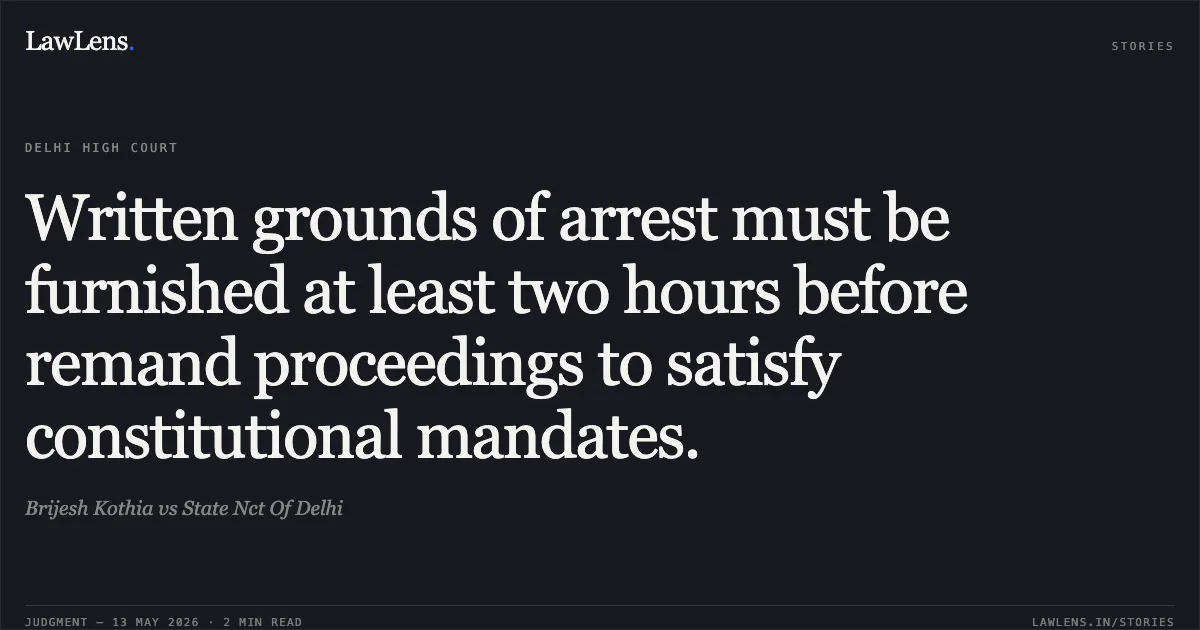
1. Whether the failure to supply "grounds of arrest" in writing to an arrestee at the time of arrest, or at least two hours prior to production before a Magistrate, renders the arrest and subsequent detention illegal.
Source reference: p. 2 / para. 1, 102. Whether the requirement of furnishing written grounds of arrest, as established in Mihir Rajesh Shah v. State of Maharashtra, applies to arrests made prior to the date of that judgment.
Source reference: p. 11, 15 / para. 18, 26Law Applied
Article 22(1) read with Article 21 of the Constitution of India, which mandates that every arrested person must be informed of the grounds of such arrest.
Source reference: para. 9Pankaj Bansal v. Union of India and Prabir Purkayastha v. State (NCT of Delhi), which established that grounds must be conveyed in writing.
Source reference: para. 13, 17Procedural timelines set in Mihir Rajesh Shah v. State of Maharashtra, requiring written grounds to be supplied no later than two hours prior to production before a Magistrate.
Source reference: para. 10, 25Dr. Rajinder Rajan v. Union of India, which clarified that these constitutional safeguards apply to all arrests made after the Pankaj Bansal decision (03.10.2023).
Source reference: para. 9, 26-27Reasoning
The court reasoned that providing "grounds of arrest" is a weighty constitutional safeguard, not a "procedural nicety".
Source reference: para. 1It distinguished between "reasons for arrest" (general justifications) and "grounds of arrest" (specific, personalized facts allowing the accused to seek legal advice).
Source reference: para. 24The court found that the State failed to demonstrate that written grounds were served on the petitioner in Gujarat or Delhi within the mandatory two-hour window before remand proceedings.
Source reference: para. 29.2It rejected the State's argument that the Mihir Rajesh Shah ruling was strictly prospective, noting that the Supreme Court in Dr. Rajinder Rajan applied the same standards to past arrests because the rule flows directly from Article 22(1).
Source reference: para. 26The court concluded that the petitioner suffered "demonstrable privilege" because he was unable to meaningfully consult counsel or oppose transit and police remands without knowing the concrete basis for his arrest.
Source reference: para. 29.3, 29.4Holding
The court held that the petitioner’s arrest and subsequent detention were constitutionally infirm due to the non-supply of written grounds of arrest.
The petitioner was granted regular bail subject to a personal bond of Rs. 1,00,000/- and specific conditions including passport surrender and cooperation with the investigation; the court clarified that the agency is at liberty to effect a fresh arrest in strict compliance with the law if necessary.
Source reference: para. 31, 33Acts & Sections Cited
2 provisions across 2 statutes referred to in this judgment. Each provision opens on LawLens.
Code of Criminal Procedure, 19731
Indian Penal Code, 18601
Original Court PDF
Brijesh KothiavsState Nct Of Delhi
Click to open original judgment
Original judgment, available to read, download and summarize on LawLens.in


