Facts
Respondent No. 1 filed a suit for perpetual injunction against the petitioner; the suit was decreed, and the petitioner’s first appeal was dismissed.
Source reference: paras. 2, 7; pp. 3–4, 6–8In the petitioner’s second appeal, the High Court set aside the judgments below and remitted the matter for consideration of additional documents and evidence.
Source reference: paras. 2, 7; pp. 3–4, 6–8During the second appeal, respondent No. 1 sold the suit property to respondent No. 2.
Source reference: paras. 2, 7; pp. 3–4, 6–8Respondent No. 2 then applied under Order XXII Rule 10 CPC to come on record as assignee.
Source reference: paras. 2, 7; pp. 3–4, 6–8The trial court allowed the application, prompting the petitioner’s writ petition.
Source reference: paras. 2, 7; pp. 3–4, 6–8Issues
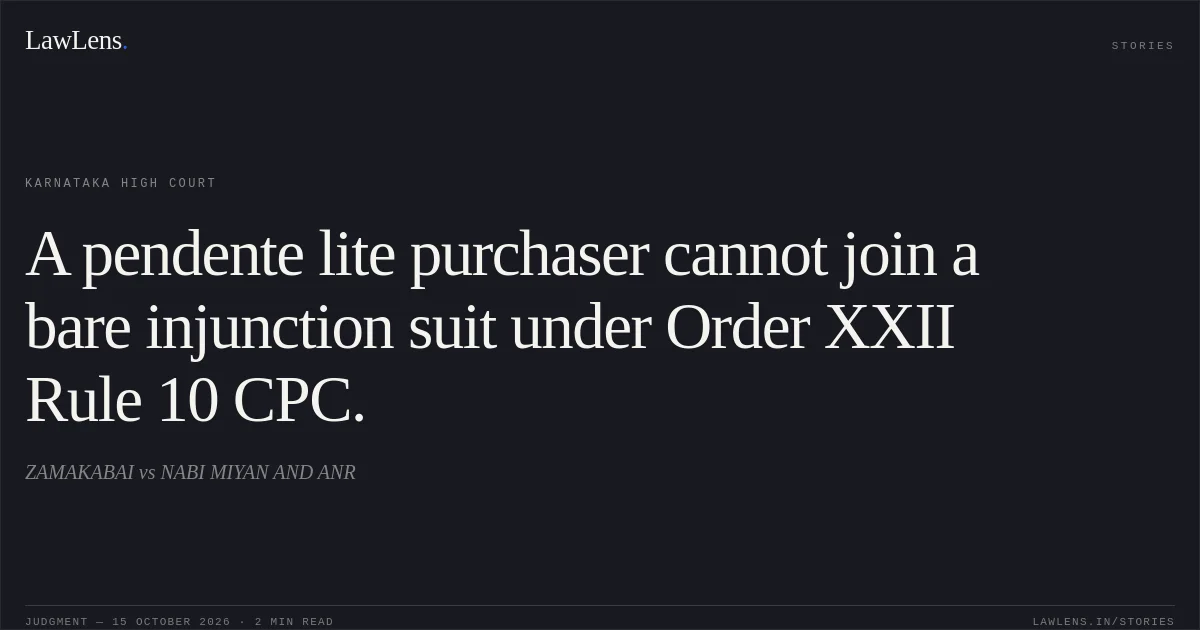
1. Whether the purchaser of the suit property during the pendency of the second appeal could be impleaded as an assignee under Order XXII Rule 10 CPC in a suit for bare injunction.
Source reference: paras. 4–7; pp. 5–82. Whether the purchaser’s remedy, if aggrieved by the petitioner’s conduct, was to bring a separate suit rather than join the pending injunction suit.
Source reference: paras. 4–7; pp. 5–8Law Applied
The Court considered Order XXII Rule 10 CPC, which concerns continuation of proceedings where an interest in the subject matter is assigned or devolves during litigation, and Section 52 of the Transfer of Property Act, 1882, which embodies the doctrine of lis pendens.
Source reference: paras. 4, 7; pp. 5, 7–8It held that, in this case, the suit’s bare-injunction scope was limited to the plaintiff’s possession and alleged interference as at the date the suit was filed; the pendente lite purchaser could not be impleaded under Order XXII Rule 10 in that suit and could pursue a separate suit if aggrieved.
Source reference: para. 7; pp. 7–8Reasoning
The Court noted that respondent No. 2 purchased the property while the second appeal was pending and treated the transaction as subject to lis pendens.
Source reference: para. 7; p. 7Because the underlying suit concerned respondent No. 1’s asserted grievance and required determination of possession and interference as at the filing date, the Court concluded that respondent No. 2’s purchase did not justify joining the pending bare-injunction suit under Order XXII Rule 10 CPC.
Source reference: para. 7; pp. 7–8The trial court had therefore erred in allowing the application.
Source reference: para. 7; pp. 7–8Holding
The High Court allowed the writ petition, set aside the trial court’s order dated 3 July 2024, and dismissed respondent No. 2’s application under Order XXII Rule 10 CPC.
It reserved liberty to respondent No. 2 to file a separate suit, if so desired.
Source reference: para. 8; p. 8Acts & Sections Cited
1 provisions across 1 statute referred to in this judgment. Each provision opens on LawLens.
Transfer of Property Act, 18821
Original Court PDF
ZAMAKABAIvsNABI MIYAN AND ANR
Click to open original judgment
Original judgment, available to read, download and summarize on LawLens.in