Facts
The prosecution alleged that, arising from rivalry between the complainant’s family and the respondents concerning construction of a hotel, the respondents formed an unlawful assembly on 14 May 2000 and assaulted the complainant and other prosecution witnesses with dangerous weapons.
Source reference: para. 2, p. 1It was further alleged that the respondents trespassed into the complainant’s hotel and took away cash.
Source reference: para. 2, p. 1The respondents were prosecuted under Sections 147, 148, 395, 452, 324, 323, 336, 337, 427, 429, 504 and 506 read with Section 149 of the Indian Penal Code (IPC).
Source reference: para. 2, p. 1The Ad-hoc Additional Sessions Judge, Raigad, Alibag acquitted all the respondents by judgment dated 8 January 2004, leading the State to file the present appeal.
Source reference: paras. 1–3, p. 1The trial court considered the complainant and injured witnesses to be interested witnesses, found inadequate corroboration from medical and independent evidence, and noted material discrepancies and the possibility of tutoring in the context of existing political and personal rivalry.
Source reference: para. 8, pp. 3–4Issues
Whether the trial court erred in disbelieving the evidence of the complainant and injured prosecution witnesses and in acquitting the respondents of the offences alleged under the IPC.
Source reference: paras. 6–9, pp. 2–4Whether the evidence on record rendered the acquittal judgment perverse or otherwise unsustainable so as to warrant appellate interference.
Source reference: para. 9, p. 4Law Applied
The prosecution invoked Sections 147, 148, 395, 452, 324, 323, 336, 337, 427, 429, 504 and 506 read with Section 149 IPC, concerning unlawful assembly, rioting, robbery/dacoity, house-trespass, voluntarily causing hurt, acts endangering life or personal safety, mischief, criminal intimidation and common-object liability.
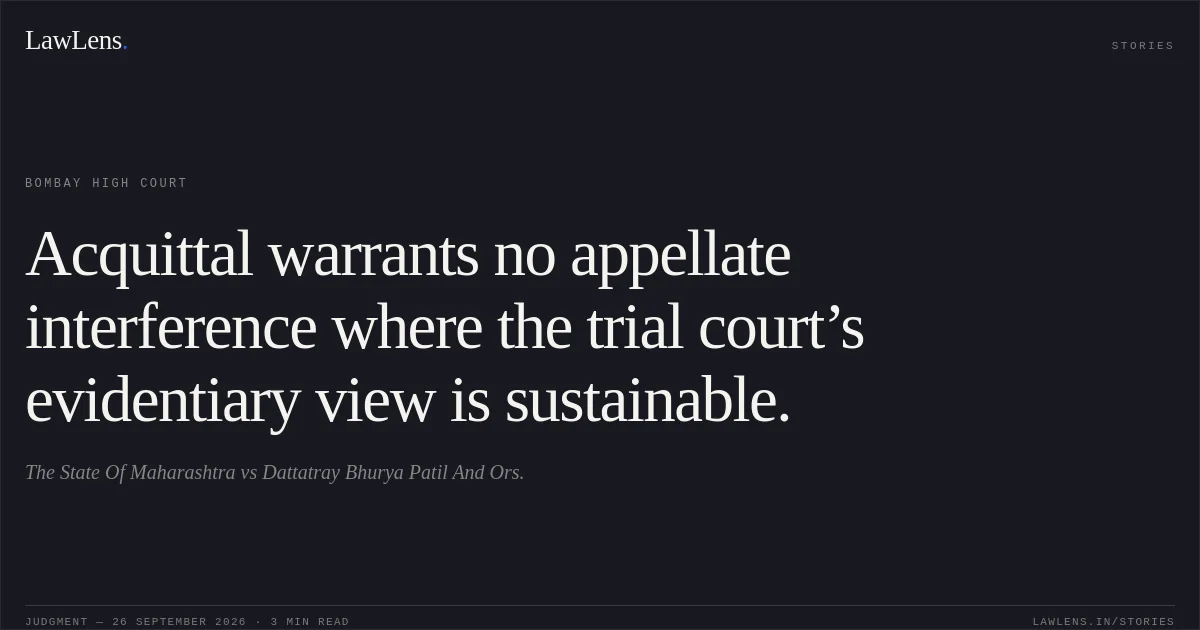
Source reference: para. 2, p. 1The Court applied the appellate principle that an acquittal should not be disturbed where the trial court’s assessment of evidence is not perverse and the view adopted is a reasonably possible or sustainable view on the evidence.
Source reference: para. 9, p. 4The Court also accepted the evidentiary importance of corroboration, material discrepancies, and the assessment of interested or partisan testimony in determining whether the prosecution had established the charges beyond reasonable doubt.
Source reference: para. 8, pp. 3–4Reasoning
The High Court found that the trial court had reasonably evaluated the testimony of the complainant and injured witnesses against the medical evidence and the evidence of independent witnesses.
Source reference: para. 8, pp. 3–4The alleged discrepancies between the complainant’s immediate complaint and his testimony in court, together with the substantially similar testimony of other prosecution witnesses, justified the trial court’s concern regarding reliability and possible tutoring.
Source reference: para. 8, pp. 3–4The Court also considered the admitted rivalry between the parties, including disputes relating to construction, local political control and the removal of the complainant’s father from the post of Sarpanch, as circumstances capable of furnishing a motive for false implication.
Source reference: para. 8, pp. 3–4Since the trial court’s conclusion that the prosecution evidence lacked sufficient corroboration was not shown to be perverse, and its view was not otherwise unsustainable, the High Court declined to reappreciate the evidence in favour of the State.
Source reference: para. 9, p. 4Holding
The High Court answered the issues against the State.
It held that the trial court had given valid and sustainable reasons for disbelieving the prosecution evidence and acquitting the respondents, and that no ground for appellate interference was made out.
Source reference: para. 9, p. 4The State’s appeal was accordingly dismissed, and the acquittal of Respondent Nos. 1 to 21 was affirmed.
Source reference: para. 9, p. 4Acts & Sections Cited
13 provisions across 1 statute referred to in this judgment. Each provision opens on LawLens.
Original Court PDF
The State Of MaharashtravsDattatray Bhurya Patil And Ors.
Click to open original judgment
Original judgment, available to read, download and summarize on LawLens.in