Facts
The petitioner, a registered Society, was granted permission to conduct a bhandara (feast) at Kedarnath from June 20, 2025, to July 20, 2025
Source reference: para. 2This permission was later revised to a joint venture with another society, re-fixing the period from May 5, 2025, to June 20, 2025
Source reference: para. 3By mutual agreement, the petitioner was scheduled to operate from June 6, 2025, to June 20, 2025
Source reference: para. 4On June 6, 2025, authorities stopped the feast and seized the petitioner’s articles without prior notice
Source reference: para. 5The Sub Divisional Magistrate (SDM), Ukhimath, issued an order on the same day imposing a fine of ₹96,000, alleging the petitioner was operating illegally beyond May 31, 2025
Source reference: para. 5The State defended the action by producing an internal letter (No. 325) claiming the period was cut short and cited a complaint from Shree Kedar Sabha
Source reference: para. 7-9Issues
Whether the impugned order imposing a penalty and seizing articles was legally sustainable in light of the permission granted until June 20, 2025
Source reference: para. 10-13Whether the state action violated the principles of natural justice by failing to provide notice or an opportunity of hearing
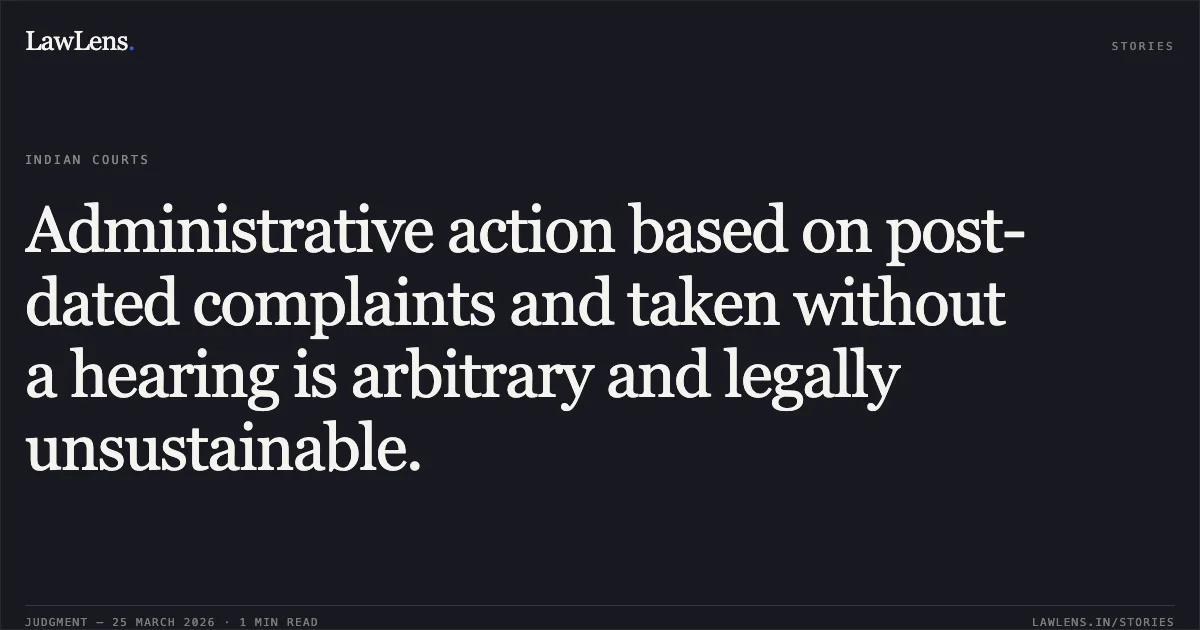
Source reference: para. 13, 16Whether the administrative action was arbitrary given the chronological discrepancy between the complaint date and the order date
Source reference: para. 15, 17Law Applied
The court applied the fundamental principles of natural justice (audi alteram partem), which mandate that a granted permission cannot be altered or an adverse penal order passed without providing the affected party an opportunity for a hearing
Source reference: para. 13, 16It further relied on administrative law principles prohibiting arbitrary, unreasonable, and factually "false and incorrect" state actions
Source reference: para. 1, 17Reasoning
The court found that the petitioner possessed a valid permission to conduct the feast until June 20, 2025, as evidenced by Letter No. 324
Source reference: para. 10, 16It dismissed the State’s reliance on Letter No. 325 (which purportedly shortened the duration), noting that the document was never served upon the petitioner and appeared to be an afterthought to justify illegal actions
Source reference: para. 11The court highlighted a significant procedural absurdity: the impugned order was passed on June 6, 2025, while the complaint by Shree Kedar Sabha, which the State claimed was the basis for the action, was dated June 10, 2025
Source reference: para. 12, 15, 17This chronological impossibility led the court to conclude that the grounds for the penalty were fabricated and the seizure of articles—including food and utensils—was conducted without due process
Source reference: para. 13, 17Holding
The Court answered the issues in the negative regarding the State’s conduct. It held that the SDM’s action was a violation of legal norms and natural justice
The Court quashed the impugned order dated June 6, 2025. It directed the respondents to return all seized imperishable articles within two weeks and ordered the authorities to consider the petitioner’s application for future seasons, keeping in view their religious sentiments
Source reference: para. 18, 19, 20The writ petition was allowed
Source reference: para. 21Original Court PDF
SRI GANESH SEWA SAMITI AAZADvsSTATE OF UTTARAKHAND
Click to open original judgment
Original judgment, available to read, download and summarize on LawLens.in