Facts
The State appealed under Sections 378(1) and 378(3) CrPC against the respondents’ acquittal of charges under Sections 147, 379, 436, 447 and 436/149 IPC.
Source reference: paras. 2, 4–5, pp. 2–4The prosecution alleged that, during a mob incident at Runni Saidpur on 16 January 1998, the respondents looted and set fire to shops, including the informant’s hardware shop.
Source reference: paras. 2, 4–5, pp. 2–4At trial, the informant did not support the material allegations in his report; other witnesses were hostile, lacked direct knowledge, or gave inconsistent evidence.
Source reference: paras. 6–7, pp. 4–6The trial court acquitted the respondents, finding their specific participation unproved beyond reasonable doubt.
Source reference: paras. 6–7, pp. 4–6Issues
1. Whether the trial court’s acquittal required interference in light of the evidence on record.
Source reference: para. 12, p. 82. Whether the prosecution proved beyond reasonable doubt the respondents’ participation in the alleged acts of looting, vandalism and arson.
Source reference: para. 15, p. 10Law Applied
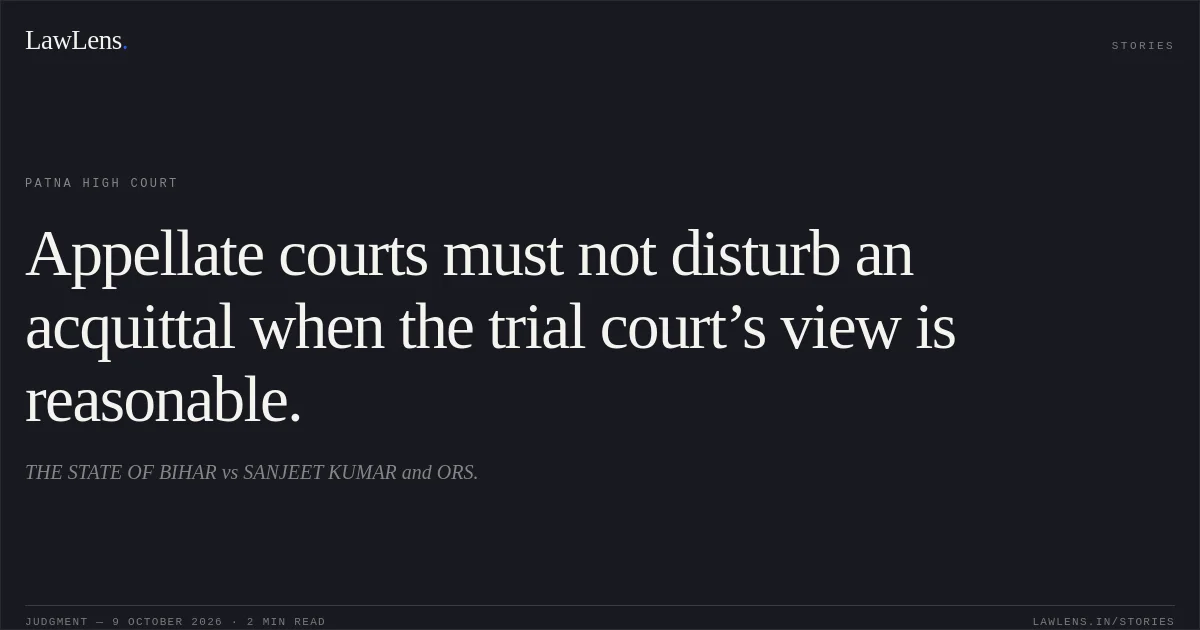
Under Chandrappa v. State of Karnataka, an appellate court may fully review and reappreciate evidence in an appeal against acquittal, but the acquittal reinforces the presumption of innocence; where two reasonable views are possible, the view favouring the accused should ordinarily prevail.
Source reference: para. 13, pp. 8–10Ghurey Lal v. State of U.P. confirms that an acquittal should not be disturbed unless it is perverse or wholly unsustainable.
Source reference: para. 14, p. 10An FIR is not substantive evidence and may be used to corroborate or contradict its maker within the limits of the Evidence Act; it cannot prove its contents when the maker disowns them (Aghnoo Nagesia v. State of Bihar; Malkiat Singh v. State of Punjab).
Source reference: paras. 17–18, pp. 11–12Statements under Section 161 CrPC are not substantive evidence and may be used only for legally permitted purposes.
Source reference: para. 20, p. 12A hostile witness’s reliable testimony is not automatically inadmissible, but that principle does not overcome material deficiencies in the evidence.
Source reference: para. 22, p. 13Reasoning
The informant denied witnessing or making the material allegations concerning the breaking open, looting and burning of his shop, so the written report could not itself establish those allegations.
Source reference: paras. 16–17, pp. 10–11The remaining evidence did not reliably establish the respondents’ identities or specific acts: some witnesses lacked direct knowledge, while others gave inconsistent accounts concerning the participants and the manner of the arson.
Source reference: paras. 19–21, pp. 12–13The court found that the trial court had assessed the evidence as a whole and reached a reasonable view; the State had not shown perversity, manifest illegality or unsustainability warranting appellate intervention.
Source reference: paras. 23–24, pp. 13–14Holding
The court held that the acquittal did not warrant interference and answered the issue against the State.
The appeal was dismissed at the admission stage; any pending applications were also disposed of.
Source reference: paras. 25–26, p. 15Acts & Sections Cited
11 provisions across 2 statutes referred to in this judgment. Each provision opens on LawLens.
Code of Criminal Procedure, 19734
Indian Penal Code, 18607
Original Court PDF
THE STATE OF BIHARvsSANJEET KUMAR and ORS.
Click to open original judgment
Original judgment, available to read, download and summarize on LawLens.in