Facts
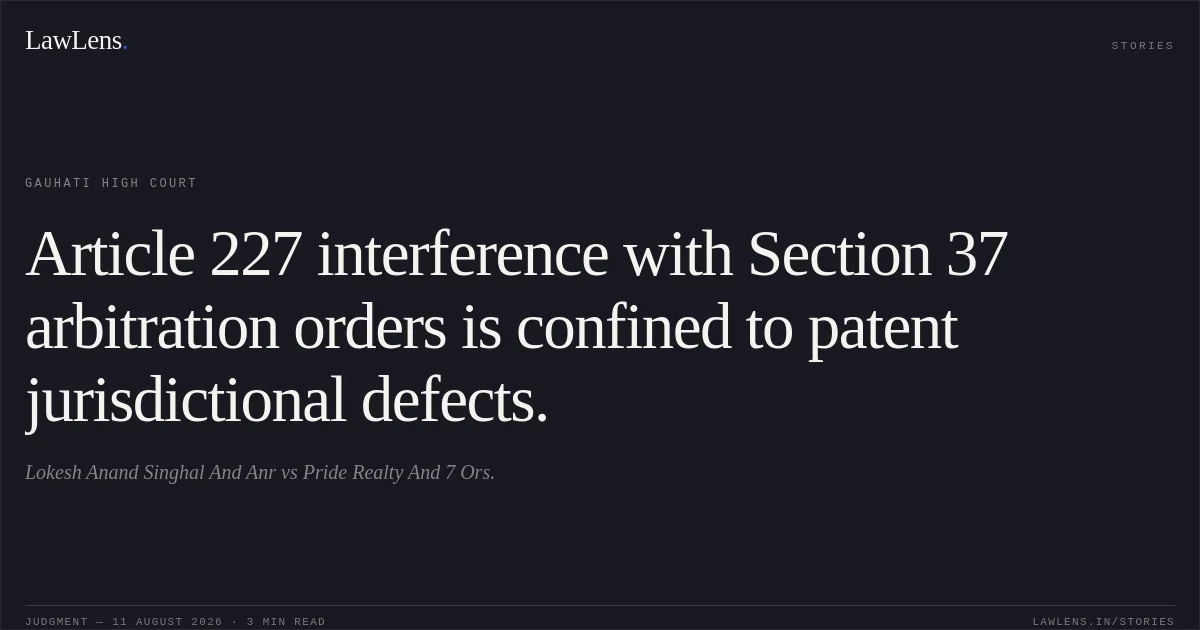
The petitioners challenged, under Article 227 of the Constitution, the order dated 20 May 2026 by which the District Judge, Kamrup (M), refused to stay an order dated 17 February 2026 passed under Section 9 of the Arbitration and Conciliation Act, 1996.
Source reference: paras. 2, 9–10; pp. 4, 6–7Disputes had arisen among stakeholders of the Protech Group, including the respondent partnership firm. Following allegations of signature fraud, financial irregularities and misappropriation, the petitioner No. 1 requested IndusInd Bank to freeze the firm’s current account, which the bank initially did.
Source reference: para. 4; p. 5The partnership deed contained an arbitration clause.
Source reference: para. 5; p. 5The respondents thereafter filed a Section 9 application seeking de-freezing of the account and restraints against the petitioner’s interference with the firm’s and related entities’ day-to-day affairs.
Source reference: para. 6; p. 5The Civil Judge restrained petitioner No. 1 from interfering with the firm’s affairs or freezing its and related entities’ bank accounts until constitution of the arbitral tribunal.
Source reference: paras. 7–8; pp. 6–7The petitioners appealed under Section 37(1)(b) and sought stay under Order XLI Rule 5 CPC. The District Judge declined interim stay, holding that the petitioners’ objections substantially concerned the merits of the appeal.
Source reference: paras. 9–10, 23, 36; pp. 6–7, 12, 17–18Issues
Whether the arbitral proceedings had commenced within the meaning of Section 21 of the Arbitration and Conciliation Act, 1996, thereby satisfying the requirement under Section 9(2) that arbitral proceedings be initiated within the prescribed period.
Source reference: paras. 16, 21–23, 32–33; pp. 9, 11–12, 15Whether the High Court should exercise its supervisory jurisdiction under Article 227 to interfere with the District Judge’s refusal to stay the Section 9 order during the pendency of the appeal under Section 37.
Source reference: paras. 17–18, 24–25, 34–38; pp. 9–10, 12–18Whether the District Judge’s refusal to grant stay was perverse, patently illegal, or otherwise warranted interference under Article 227.
Source reference: paras. 36–38; pp. 17–18Law Applied
Section 21 of the Arbitration and Conciliation Act, 1996 provides that arbitral proceedings commence when the respondent receives a request for reference of the dispute to arbitration; the Court held that receipt of such notice is sufficient for determining compliance with Section 9(2).
Source reference: para. 32; p. 15Section 9(2) requires commencement of arbitral proceedings within the statutory period after interim protection is granted under Section 9.
Source reference: paras. 16, 32; pp. 9, 15Section 5 restricts judicial intervention in arbitration matters except where permitted by the Act.
Source reference: para. 33; p. 15Although Article 227 jurisdiction is constitutionally available and is not barred by Section 5, it must be exercised sparingly and with extreme circumspection, particularly against orders passed in proceedings under Section 37.
Source reference: paras. 34–35; pp. 15–17Relying on Bhaven Construction v. Executive Engineer, Sardar Sarovar Narmada Nigam Ltd., quoting Deep Industries Ltd. v. ONGC, the Court held that Article 227 interference in arbitration matters is justified only where the order is patently without inherent jurisdiction or suffers from manifest illegality.
Source reference: para. 34; pp. 15–17The principles governing stay under Order XLI Rule 5 CPC require the appellate court to assess the circumstances warranting suspension of the impugned order, but merits of the appeal ordinarily should not be conclusively determined at the stay stage.
Source reference: paras. 23, 36–37; pp. 12, 17–18Reasoning
The petitioners had admitted, in their application before the Civil Judge, receipt of the notice invoking arbitration under the partnership deed. Accordingly, the arbitral proceedings were deemed to have commenced on the date of receipt of that notice under Section 21, and the Court found no prima facie breach of Section 9(2).
Source reference: para. 32; p. 15The petitioners’ remaining objections—including their alleged statutory right to participate in partnership affairs, alleged financial misconduct by respondent No. 2, the purported mediated settlement, and alleged bank irregularities—raised matters going to the merits of the pending Section 37 appeal rather than demonstrating jurisdictional error in the stay order.
Source reference: paras. 11–16, 23, 36–37; pp. 7–10, 12, 17–18The District Judge’s view that these issues should be considered at the final hearing of the appeal was neither perverse nor legally impermissible.
Source reference: paras. 36–37; pp. 17–18Since the impugned order did not reveal patent lack of jurisdiction or manifest illegality, and the statutory arbitration framework required limited judicial intervention, the High Court declined to exercise Article 227 jurisdiction.
Source reference: paras. 34–38; pp. 15–18Holding
The High Court held that receipt of the arbitration notice commenced the arbitral proceedings under Section 21 and that no prima facie violation of Section 9(2) was established.
It further held that the District Judge’s refusal to stay the Section 9 order was not perverse or patently illegal and did not warrant interference under Article 227, particularly while the Section 37 appeal remained pending and was listed for expeditious disposal.
Source reference: paras. 35–38; pp. 16–18The CRP (IO) was dismissed, and the parties were directed to bear their own costs.
Source reference: paras. 38–40; p. 18Acts & Sections Cited
7 provisions across 3 statutes referred to in this judgment. Each provision opens on LawLens.
Indian Partnership Act, 19321
Arbitration and Conciliation Act, 19965
Code of Civil Procedure, 19081
Original Court PDF
Lokesh Anand Singhal And AnrvsPride Realty And 7 Ors.
Click to open original judgment
Original judgment, available to read, download and summarize on LawLens.in