Facts
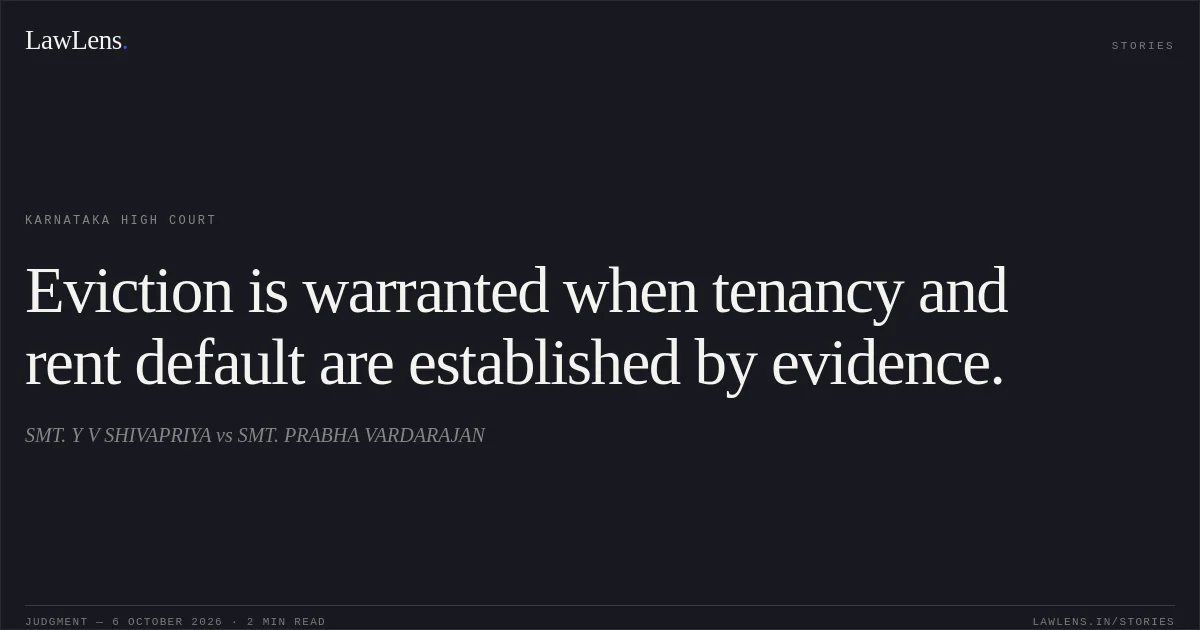
The plaintiff-landlord sued for eviction and recovery of rent arrears, asserting that the defendant occupied the premises as a tenant under an unregistered rent-cum-lease arrangement and had defaulted in payment.
Source reference: para. 3–8The defendant admitted the tenancy arrangement but denied default.
Source reference: para. 3–8The trial court decreed the suit, finding the plaintiff to be the owner and the defendant to be a tenant in arrears.
Source reference: para. 3–8The defendant appealed, contending, among other things, that the suit schedule premises varied from the premises supported by her documents.
Source reference: para. 3–8The High Court considered the plaintiff’s khata records and lease or rent agreements, as well as the defendant’s admissions in evidence.
Source reference: para. 11Issues
1. Whether the trial court’s decree directing the defendant to vacate and hand over the suit premises required appellate interference.
Source reference: para. 102. Whether the evidence supported the findings that the plaintiff was the owner, the defendant was the tenant, and the defendant had defaulted in paying rent.
Source reference: para. 11–12Law Applied
The appeal was brought under Section 96 read with Order XLI Rule 1 of the Code of Civil Procedure.
Source reference: p. 1The trial court had framed an issue concerning termination of the tenancy by notice under Section 106 of the Transfer of Property Act.
Source reference: para. 5The High Court’s stated basis for decision was the evidence on record, including the plaintiff’s ownership documents, the lease and rent agreements, and the defendant’s admissions regarding the tenancy and periods of non-payment; it cited no precedent.
Source reference: para. 11–12Reasoning
The High Court found that the khata certificate and extract supported the plaintiff’s ownership, while the lease and rent agreements established the defendant’s tenancy.
Source reference: para. 11–12It further relied on the defendant’s admissions concerning the email correspondence, renewal of the lease upon prompt rent payment, and periods when rent was not paid.
Source reference: para. 11–12On that evidence, the Court upheld the trial court’s findings and concluded that the decree disclosed no perversity warranting appellate interference.
Source reference: para. 11–12Holding
The Court answered the point for consideration in the negative and dismissed the appeal.
It directed the defendant to vacate and deliver possession within six months, to pay rent regularly during that period, and to file an undertaking affidavit within three weeks.
Source reference: para. 13–15In the event of a rent default, the plaintiff may execute the decree.
Source reference: para. 13–15Acts & Sections Cited
2 provisions across 2 statutes referred to in this judgment. Each provision opens on LawLens.
Code of Civil Procedure, 19081
Transfer of Property Act, 18821
Original Court PDF
SMT. Y V SHIVAPRIYAvsSMT. PRABHA VARDARAJAN
Click to open original judgment
Original judgment, available to read, download and summarize on LawLens.in