Facts
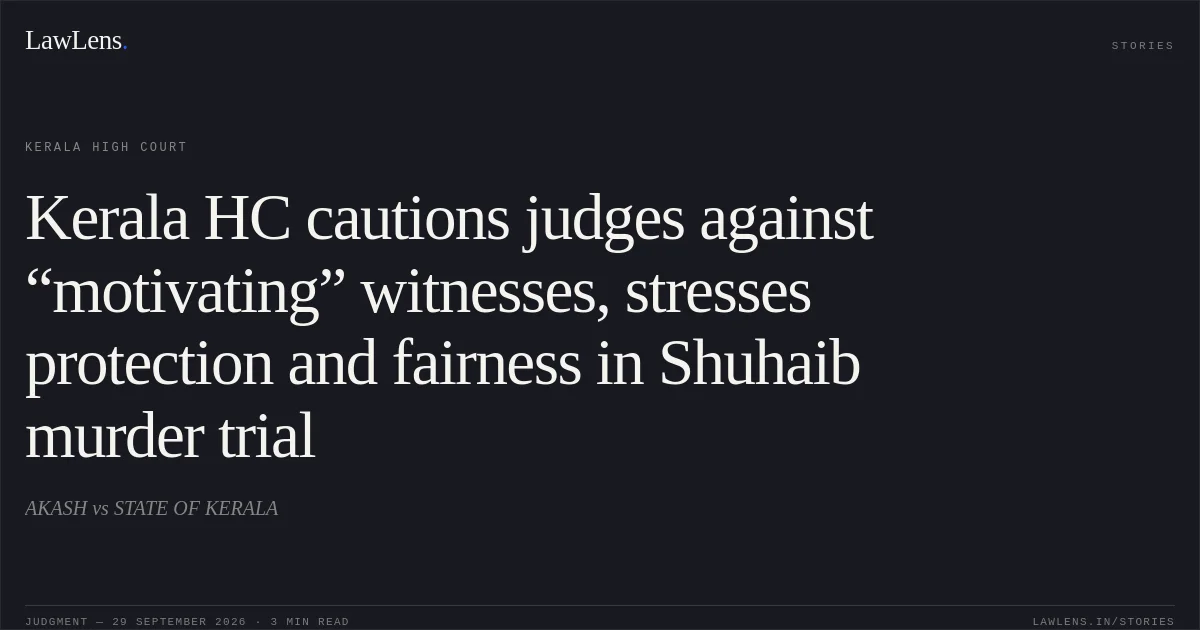
The petitioners, accused Nos. 1 to 3 in S.C. No. 596 of 2018, sought (i) transfer of the sessions trial and (ii) setting aside of an order refusing to record PW2’s evidence in question-and-answer form.
Source reference: pp. 5–7, paras. 1–3The prosecution alleged that the accused conspired to attack Shuhaib with weapons and explosives, causing his death and injuries to others
Source reference: pp. 5–7, paras. 1–3The petitioners contended that the manner in which the trial court dealt with their request, its subsequent cancellation of the accused persons’ bail bonds, and its conduct towards witnesses and defence counsel created a reasonable apprehension that they would not receive a fair trial
Source reference: pp. 7–9, paras. 3(iv)–(ix), 16The Sessions Court had dismissed an earlier transfer application on the merits; the High Court considered both the transfer petition and the challenge to the evidence-recording order together
Source reference: pp. 7–8, 15Issues
Whether the Sessions Judge’s refusal to record PW2’s evidence in question-and-answer form was erroneous and liable to be set aside.
Source reference: p. 20, para. 19(a)Whether the circumstances established justifiable grounds to transfer the trial to another court.
Source reference: p. 20, para. 19(b)Law Applied
Section 311(2) of the Bharatiya Nagarik Suraksha Sanhita, 2023 (BNSS) provides that evidence in a sessions trial is ordinarily recorded in narrative form, while permitting the presiding Judge, in judicial discretion, to record any part in question-and-answer form; that discretion must be exercised on relevant considerations and in furtherance of a fair trial.
Source reference: pp. 21–22, paras. 21–22Makhan Lal Bangal v. Manas Bhunia explains that narrative recording is the ordinary rule in sessions trials.
Source reference: pp. 22–23, para. 23Section 447 BNSS permits transfer where a fair and impartial trial cannot be had or transfer is otherwise expedient in the interests of justice; for transfer within the same sessions division, an application must first have been made to and rejected by the Sessions Judge.
Source reference: pp. 15–17, paras. 12–14A transfer requires an apprehension that is reasonable, genuine and justifiable; an erroneous order, by itself, is not sufficient, though it may be considered as part of the overall circumstances.
Source reference: pp. 24–27, paras. 28–32The Court relied on Balakrishna Pillai v. State of Kerala and K.P. Tiwari v. State of M.P. on the transfer standard and the need not to infer improper motive merely from judicial error, and on Berely v. Xavier concerning unfounded transfer allegations and their effect on the criminal judiciary.
Source reference: pp. 24–27, paras. 28–32Reasoning
The Court held that the accused had no right to insist on question-and-answer recording merely because they considered PW2’s testimony tutored; the defence could test credibility through cross-examination, and the record disclosed no arbitrary or prejudicial exercise of the Judge’s discretion.
Source reference: pp. 20–24, paras. 20–24On transfer, the Court found that the refusal to change the mode of recording and the bail-related grievance did not establish a continuing, objectively reasonable apprehension: the impugned evidence-recording order was upheld, while the bail-cancellation order had already been set aside and bail confirmed.
Source reference: pp. 23–25, paras. 25–28The Court also rejected the State’s maintainability objection, holding that dismissal of the Sessions Court transfer application satisfied the statutory precondition under Section 447(2) BNSS; no separate challenge to that dismissal was required.
Source reference: pp. 15–17, paras. 11–15It separately found no material showing that the Public Prosecutor’s prior appearance for the victim disqualified him from appearing for the State.
Source reference: pp. 13–15, paras. 6–10Holding
The Court answered both framed issues against the petitioners, dismissed the transfer petition and the Criminal Miscellaneous Case, and declined to interfere with the order refusing question-and-answer recording.
It nevertheless directed the Sessions Judge to ensure both sides received a full and effective opportunity to participate, including by suo motu reopening the evidence and permitting the defence to cross-examine the witnesses; it also directed expeditious disposal of the trial, untrammelled by the observations in the order.
Source reference: p. 30, para. 39Acts & Sections Cited
30 provisions across 6 statutes referred to in this judgment. Each provision opens on LawLens.
Indian Penal Code, 1860
Arms Act, 19592
Bharatiya Nagarik Suraksha Sanhita, 2023
Bharatiya Sakshya Adhiniyam, 20233
Code of Criminal Procedure, 19732
Original Court PDF
AKASHvsSTATE OF KERALA
Click to open original judgment
Original judgment, available to read, download and summarize on LawLens.in