Facts
Respondent No. 2, a tenant of the petitioners, alleged that a dispute over the return of her lease deposit and deductions for maintenance and electricity charges led to abusive conduct and physical assault by the petitioners.
Source reference: p. 3–5She also alleged that the third petitioner posted insulting material online.
Source reference: p. 3–5The police filed a charge sheet for offences under Sections 354, 504 and 506 read with Section 34 IPC, and the proceedings were pending in C.C. No. 4677/2023.
Source reference: p. 3–5A counter-complaint by the second petitioner had resulted in a ‘B’ report, which was accepted and the proceedings closed.
Source reference: p. 3–5The petitioners sought to quash the pending proceedings under Section 482 CrPC, now Section 528 BNSS.
Source reference: p. 2Issues
1. Whether the complaint and charge-sheet material disclosed the essential ingredients of the alleged offences under Sections 354, 504 and 506 read with Section 34 IPC
Source reference: pp. 8–10, 14–152. Whether continuation of the criminal proceedings arising from the landlord–tenant dispute would amount to an abuse of the process of law
Source reference: p. 15Law Applied
The Court exercised its inherent jurisdiction under Section 482 CrPC (corresponding to Section 528 BNSS) to prevent abuse of process and miscarriage of justice.
Source reference: p. 2The alleged offences were under Sections 354, 504 and 506 read with Section 34 IPC.
Source reference: pp. 2–3Relying on Mohd. Wajid v. State of Uttar Pradesh, 2023 SCC OnLine SC 951, the Court noted that Section 504 requires intentional insult accompanied by an intention or knowledge that it is likely to provoke a breach of the peace or another offence; where abusive words are relied on, their content is material to assessing that ingredient.
Source reference: pp. 10–14For criminal intimidation under Sections 503 and 506 IPC, an intention to cause alarm must be established.
Source reference: pp. 11–14Reasoning
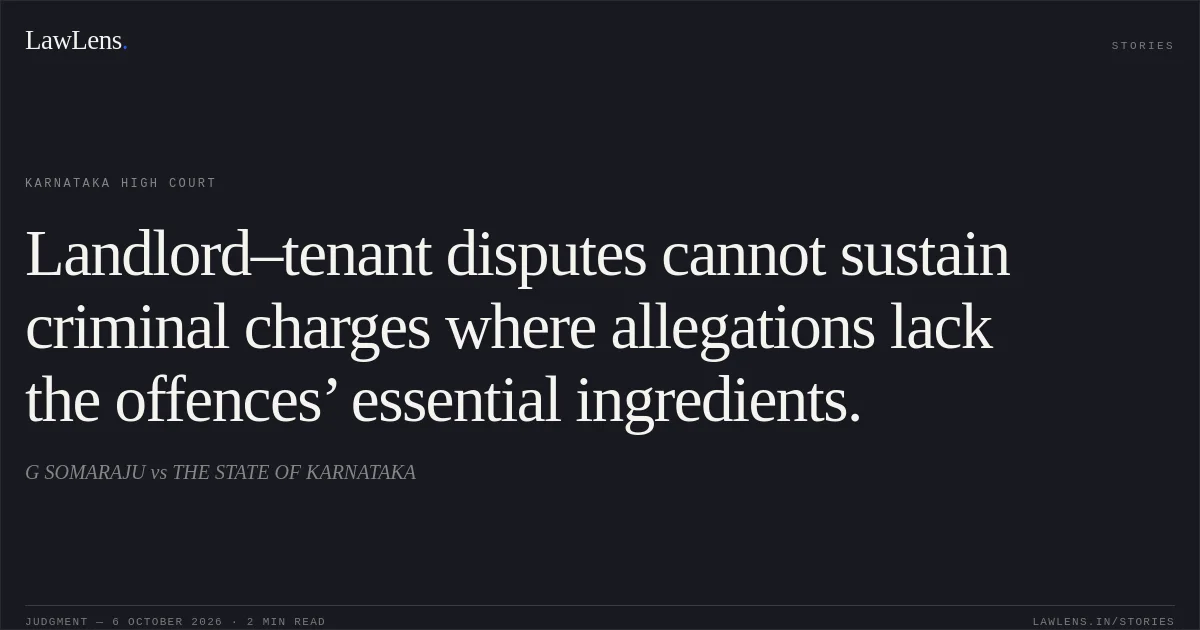
The Court considered the complaint and the charge-sheet summary and treated the dispute as arising from the parties’ landlord–tenant relationship and disagreements over the tenancy and deposit.
Source reference: pp. 3–4, 8–10It observed that the allegations, viewed against the requirements stated in Mohd. Wajid, did not disclose the necessary ingredients of Sections 504 and 506 IPC.
Source reference: pp. 14–15It also took into account that the opposing complaint arising from the same episode had ended with acceptance of a ‘B’ report, whereas the present complaint had resulted in a charge sheet.
Source reference: pp. 4, 10In the Court’s view, allowing the proceedings to continue in these circumstances would constitute an abuse of process.
Source reference: p. 15Holding
The Court allowed the petition and quashed the proceedings in C.C. No. 4677/2023 before the XLVI ACMM Court, Bengaluru, insofar as they concerned the petitioners.
Acts & Sections Cited
7 provisions across 3 statutes referred to in this judgment. Each provision opens on LawLens.
Indian Penal Code, 18605
Code of Criminal Procedure, 19731
Bharatiya Nagarik Suraksha Sanhita, 20231
Original Court PDF
G SOMARAJUvsTHE STATE OF KARNATAKA
Click to open original judgment
Original judgment, available to read, download and summarize on LawLens.in