Facts
Respondent No. 2 complained that, during a property dispute, the petitioners trespassed onto her property, erected a fence, abused her and assaulted her.
Source reference: paras. 2–5, 1; pp. 3–5Police registered Crime No. 43/2013 under Sections 323, 504 and 506 read with Section 34 IPC, investigated the matter and filed a ‘B’ final report.
Source reference: paras. 2–5, 1; pp. 3–5Respondent No. 2’s protest petition was rejected by the Magistrate, who accepted the report; the Sessions Judge allowed her revision and set aside that order.
Source reference: paras. 2–5, 1; pp. 3–5The petitioners challenged the revisional order under Section 482 CrPC.
Source reference: paras. 2–5, 1; pp. 3–5The record also referred to pending civil litigation over the property, a counter-complaint by petitioner No. 1, and witness statements which, according to the ‘B’ report, did not support respondent No. 2’s allegations.
Source reference: paras. 12–13, 18; pp. 7–9, 12Issues
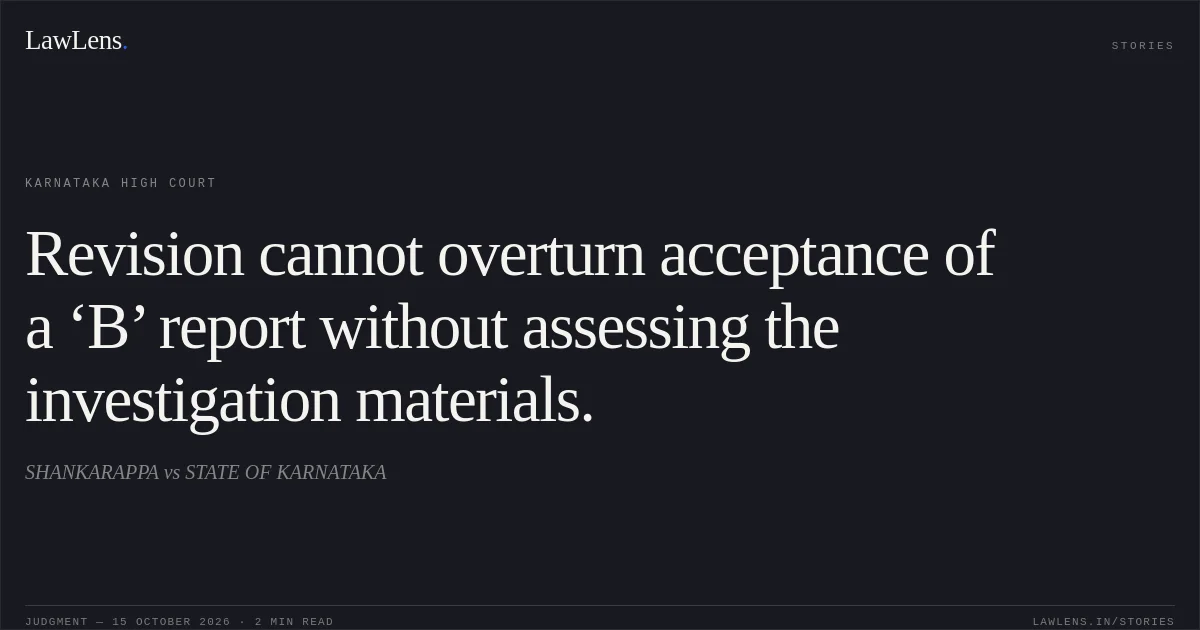
1. Whether the Sessions Judge was justified in setting aside the Magistrate’s order accepting the ‘B’ final report, having regard to the investigation materials and the Magistrate’s reasons.
Source reference: paras. 14, 19; pp. 9, 12–132. Whether, in the circumstances of the property dispute, counter-complaint and witness statements, the revisional order warranted interference under Section 482 CrPC.
Source reference: paras. 15–20; pp. 9–13Law Applied
Section 482 CrPC preserves the High Court’s inherent jurisdiction to prevent abuse of process and secure the ends of justice.
Source reference: para. 16; pp. 10–11The Court referred to State of Haryana v. Bhajan Lal on categories of cases in which quashing or other inherent intervention may be warranted, and to Neeharika Infrastructure Pvt. Ltd. v. State of Maharashtra on the general restraint courts should exercise at the investigation stage, subject to recognised exceptions.
Source reference: para. 16; pp. 10–11It also relied on Bikku Bhai Govinda Bhai v. State of Gujarat, observing that criminal proceedings should not be used as an instrument of harassment or coercion in disputes that are essentially civil, while the existence of a civil dispute alone does not bar criminal proceedings if the allegations disclose an offence.
Source reference: paras. 16–17; pp. 10–11The alleged offences were under Sections 323, 504 and 506 read with Section 34 IPC.
Source reference: para. 3; p. 4Reasoning
The High Court considered the pending property litigation and counter-complaint alongside the police investigation, including witness statements which did not support respondent No. 2’s account, and the reasons given by the Magistrate for accepting the ‘B’ report.
Source reference: paras. 13–15, 18; pp. 8–10, 12It noted that the Sessions Judge had relied on the FIR’s disclosure of an offence without adequately addressing the investigation materials and the Magistrate’s reasons.
Source reference: paras. 14, 19; pp. 9, 12–13Although a civil dispute does not itself preclude criminal action, the Court concluded that the revisional order could not be sustained without proper consideration of the full record.
Source reference: paras. 15, 17, 20; pp. 9–11, 13Holding
The Court allowed the criminal petition and set aside the Sessions Judge’s order dated 27 December 2023.
It confirmed the Magistrate’s order dated 4 February 2023 accepting the ‘B’ final report and rejecting the protest petition.
Source reference: para. 21; pp. 13–14The Court clarified that its observations were confined to this petition and would not influence other proceedings between the parties.
Source reference: para. 21; pp. 13–14Acts & Sections Cited
7 provisions across 2 statutes referred to in this judgment. Each provision opens on LawLens.
Code of Criminal Procedure, 19732
Indian Penal Code, 18605
Original Court PDF
SHANKARAPPAvsSTATE OF KARNATAKA
Click to open original judgment
Original judgment, available to read, download and summarize on LawLens.in