Facts
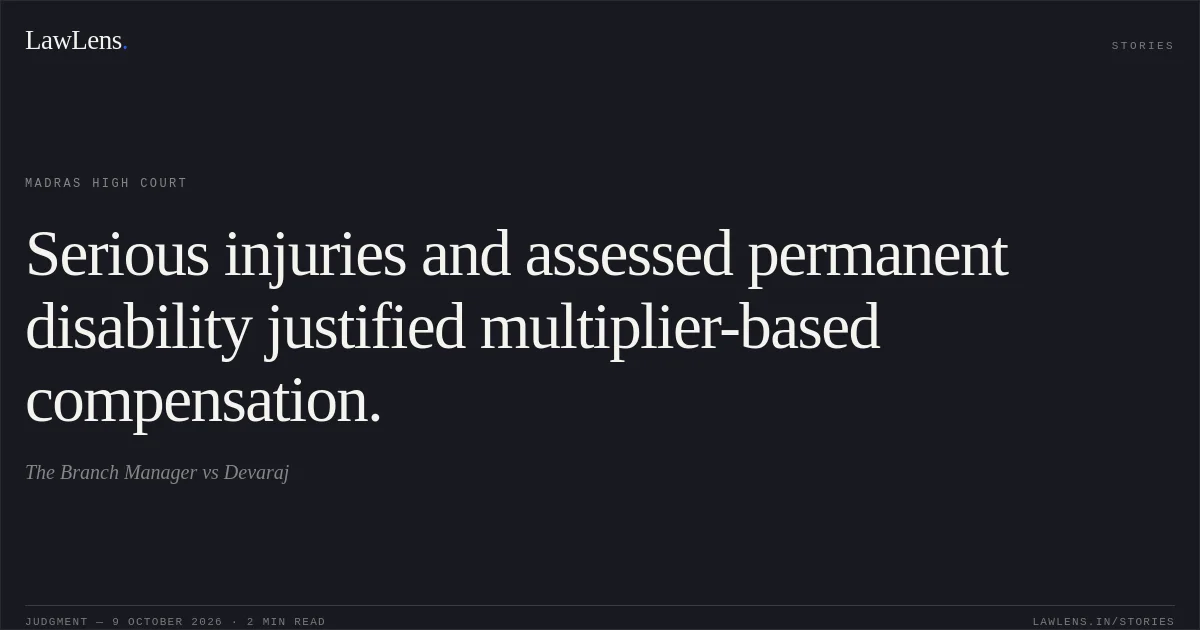
Devaraj, then aged 29, sustained multiple serious fractures and other injuries when his motorcycle collided with a bus insured by United India Insurance Co. Ltd. on 5 January 2015.
Source reference: pp. 3–6He sought compensation under Section 166 of the Motor Vehicles Act, 1988.
Source reference: pp. 3–6The Tribunal found the bus driver negligent but attributed 15% contributory negligence to Devaraj because he had no valid driving licence.
Source reference: pp. 3–6It assessed his permanent partial disability at 50%, applied the multiplier method, and awarded ₹14,61,450 after deducting 15% for contributory negligence.
Source reference: pp. 3–6The insurer appealed, challenging the quantum and the finding on contributory negligence; Devaraj cross-objected, seeking enhancement.
Source reference: pp. 6–7Issues
1. Whether the Tribunal erred in applying the multiplier method and assessing compensation for Devaraj’s injuries and loss of earning capacity.
Source reference: pp. 6–7, 102. Whether the Tribunal’s finding of 15% contributory negligence against Devaraj required interference because he lacked a valid driving licence.
Source reference: pp. 6–7, 103. Whether Devaraj was entitled to enhancement of the compensation awarded.
Source reference: pp. 6–7, 10–11Law Applied
The claim was brought under Section 166 of the Motor Vehicles Act, 1988, and the insurer’s appeal under Section 173 of that Act; the claimant’s cross-objection was under Order 41 Rule 22 of the Code of Civil Procedure.
Source reference: pp. 2–3The Court applied no cited precedent or separately articulated legal test.
Source reference: pp. 7–10It assessed the Tribunal’s treatment of contributory negligence and compensation by reference to the evidence concerning the accident, injuries, disability, treatment, and earning capacity.
Source reference: pp. 7–10Reasoning
The Court found that Devaraj admitted he lacked a valid and effective driving licence, and therefore declined to disturb the Tribunal’s attribution of 15% contributory negligence to him.
Source reference: p. 10The medical records showed multiple serious fractures, several hospital admissions totalling more than two months and 21 days, and a Medical Board assessment of 60% partial permanent disability.
Source reference: pp. 8–10In light of the injuries and disability, the Court upheld the Tribunal’s assessment of 50% disability for compensation purposes and its use of the multiplier method.
Source reference: p. 10It also found the notional monthly income of ₹10,000 and the amounts awarded under the other heads reasonable, and rejected both the insurer’s challenge and the claimant’s request for enhancement.
Source reference: p. 10Holding
The High Court dismissed the insurer’s appeal, disposed of the claimant’s cross-objection without granting enhancement, and confirmed the Tribunal’s award of ₹14,61,450.
No costs were awarded, and the connected miscellaneous petition was closed.
Source reference: p. 11Acts & Sections Cited
2 provisions across 1 statute referred to in this judgment. Each provision opens on LawLens.
Motor Vehicles Act, 19882
Original Court PDF
The Branch ManagervsDevaraj
Click to open original judgment
Original judgment, available to read, download and summarize on LawLens.in