Facts
The applicants, flat purchasers, had disputes with respondent no. 2, the developer, concerning construction and amenities at their residential complex.
Source reference: paras. 3–6, 12–19Consumer proceedings had been filed by the flat purchasers, while the developer had instituted civil and criminal proceedings against them.
Source reference: paras. 3–6, 12–19The developer alleged that, at meetings on 9 May and 12 June 2017, the applicants demanded ₹25 lakh each and threatened further trouble if he did not pay.
Source reference: paras. 3–6, 12–19An FIR was registered under Sections 385 and 34 of the IPC, followed by a chargesheet and proceedings in S.C.C. No. 57 of 2021.
Source reference: paras. 3–6, 12–19The applicants sought quashing under Section 482 CrPC, contending that the meetings were settlement discussions and the FIR was retaliatory.
Source reference: paras. 3–6, 12–19Issues
1. Whether the allegations and material, including the meeting transcripts, made out a prima facie offence under Sections 385 and 34 IPC.
Source reference: paras. 9–11, 19–222. Whether the FIR and consequential proceedings could be quashed under Section 482 CrPC despite the filing of a chargesheet, on the grounds that the allegations disclosed no offence and the prosecution was mala fide.
Source reference: paras. 23–28Law Applied
Section 383 IPC defines completed extortion as intentionally putting a person in fear of injury and thereby dishonestly inducing delivery of property; Section 385 IPC punishes putting, or attempting to put, a person in fear of injury in order to commit extortion, and does not require actual delivery of property.
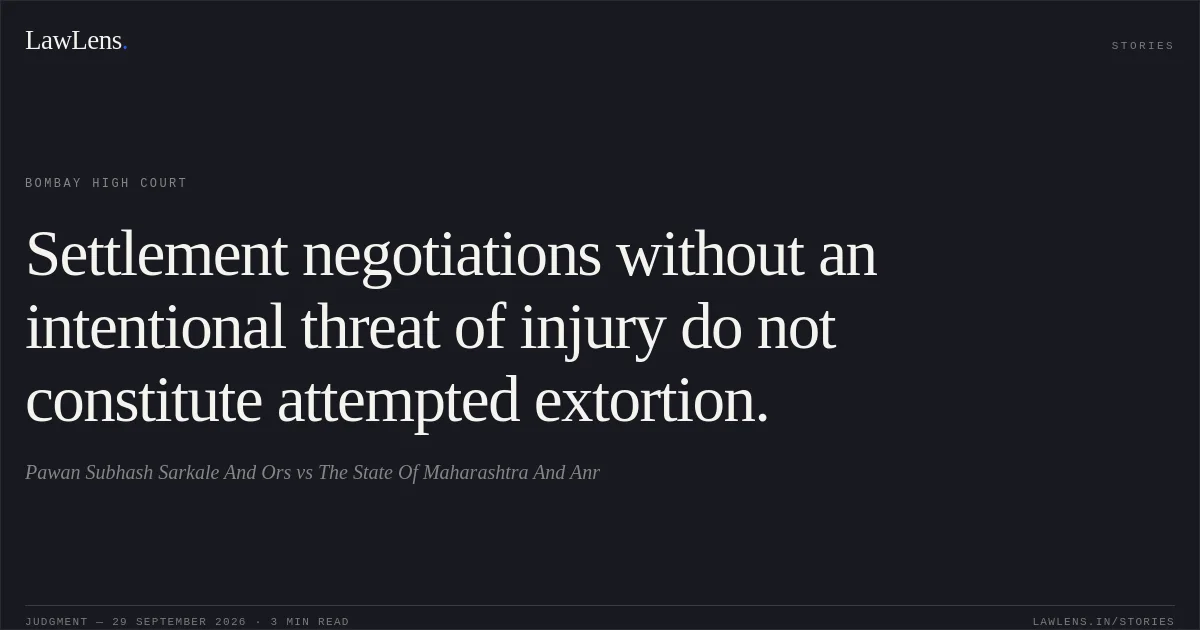
Source reference: paras. 8–11The Court treated an intentional threat or attempt to create fear of injury as essential to Section 385; a demand alone, including a disproportionate demand, is insufficient.
Source reference: paras. 9–11, 22Section 34 IPC concerns joint liability where a criminal act is done by several persons in furtherance of their common intention.
Source reference: no citationUnder State of Haryana v. Bhajan Lal, proceedings may be quashed where the allegations do not prima facie constitute an offence or where the proceeding is manifestly mala fide.
Source reference: para. 26Anand Kumar Mohatta v. State (NCT of Delhi) establishes that filing a chargesheet does not bar the High Court from exercising its inherent jurisdiction under Section 482 CrPC.
Source reference: para. 25Moh. Wajid v. State of Uttar Pradesh recognises that, where mala fide or vexatious prosecution is alleged, the Court may examine the surrounding circumstances and material collected during investigation with care.
Source reference: para. 26Reasoning
The Court examined the transcripts of both meetings alongside the parties’ dispute history and found that they reflected negotiations over compensation, the proposed construction, and possible withdrawal or resolution of pending proceedings—not threats or conduct intended to put the developer in fear of injury.
Source reference: paras. 19–22The developer’s ability to participate coherently in the discussions and make counteroffers supported the view that the meetings were settlement talks.
Source reference: paras. 19–22The Court held that the size of the alleged demand, without the essential threat or fear, did not establish an offence under Section 385; continuing litigation or pursuing lawful remedies could not itself be treated as extortion.
Source reference: para. 22It also considered the competing proceedings and the circumstances surrounding the complaint in assessing the applicants’ claim of mala fides.
Source reference: paras. 12–17, 24–26The chargesheet did not prevent quashing because the Court could still assess whether the material disclosed an offence.
Source reference: para. 25Holding
The Court held that the material did not make out a prima facie offence under Section 385 IPC and that the case fell within categories 1 and 7 of Bhajan Lal—failure to disclose an offence and manifest mala fides.
It allowed the application and quashed the FIR and the resultant chargesheet/proceedings, including S.C.C. No. 57 of 2021, in terms of the prayer clauses.
Source reference: para. 29Acts & Sections Cited
10 provisions across 5 statutes referred to in this judgment. Each provision opens on LawLens.
Code of Criminal Procedure, 19733
Bharatiya Nagarik Suraksha Sanhita, 20231
Indian Penal Code, 18604
Bharatiya Nyaya Sanhita, 20231
Specific Relief Act, 19631
Original Court PDF
Pawan Subhash Sarkale And OrsvsThe State Of Maharashtra And Anr
Click to open original judgment
Original judgment, available to read, download and summarize on LawLens.in