Facts
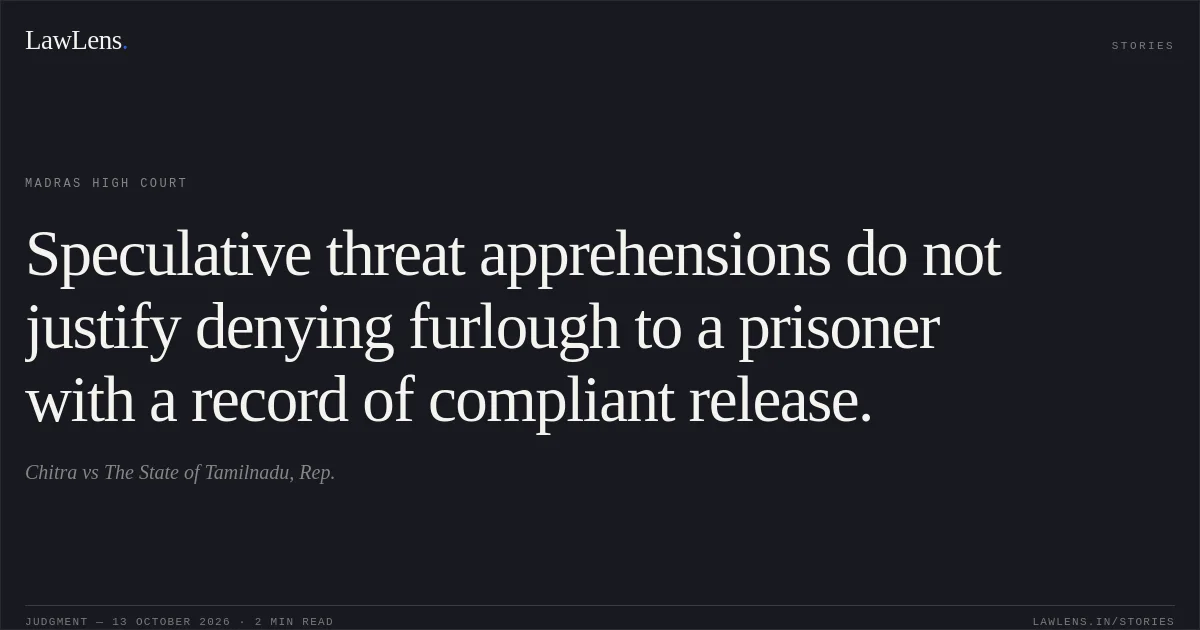
The petitioner, Chitra, sought 60 days’ furlough for her son, Prabakaran, a life convict confined at Palayamkottai Central Prison, to enable him to be with his ailing mother.
Source reference: paras. 2–3, 6; pp. 2–4He had been convicted under Sections 302, 396 and 447 IPC and his conviction was affirmed on appeal.
Source reference: paras. 2–3, 6; pp. 2–4The prison Superintendent, Deputy Inspector General of Prisons and Probation Officer had recommended furlough, and the prisoner’s prison conduct was reported satisfactory.
Source reference: para. 4; p. 3The Director General of Prisons rejected the request, relying on a police report that the mother’s illness was unsubstantiated and that release could create threats to the prisoner and the deceased’s family.
Source reference: paras. 5, 9–10; pp. 4, 6The petitioner challenged that rejection under Article 226.
Source reference: no citationThe State also reported that the prisoner had previously availed temporary releases and returned without default.
Source reference: paras. 8, 11; pp. 5–6Issues
1. Whether the rejection of the prisoner’s request for 60 days’ furlough, based on the police apprehension, should be set aside.
Source reference: paras. 9–13; pp. 6–72. Whether the prisoner should be granted furlough without escort, subject to conditions, in light of his prison conduct and past compliance with temporary release.
Source reference: paras. 12–14; pp. 7–8Law Applied
The Court exercised its jurisdiction under Article 226 of the Constitution to review the challenged administrative decision.
Source reference: no citationIt also referred to Rule 15(2)(i) of the Tamil Nadu Prisons (Release on Furlough) Rules, 2026, under which the prisoner was directed to execute a bond with two sureties.
Source reference: para. 14(vii); p. 8The judgment cites no precedent or detailed statutory test governing furlough eligibility; its decision turns on the circumstances on record, including the prisoner’s conduct and the basis for the stated security apprehension.
Source reference: no citationReasoning
The Court considered that the prisoner had previously availed temporary release without escort and surrendered to prison authorities without default.
Source reference: para. 12; p. 7It also noted that the alleged occurrence was in Tiruppur District, while the prisoner resided within the jurisdiction of the fifth respondent, and concluded that the Commissioner of Police’s apprehension was far-fetched.
Source reference: para. 12; p. 7Weighing this against the prisoner’s conduct in prison and during earlier releases, the Court found sufficient grounds to grant furlough.
Source reference: para. 13; p. 7Holding
The Court allowed the writ petition and set aside the Director General’s order dated 10 September 2026.
It directed that Prabakaran be granted furlough without escort from 13 October to 12 December 2026, subject to reporting daily at the Thachanallur Police Station, reporting back to prison by 10:00 a.m. on 12 December, executing the prescribed bond and sureties, and complying with the applicable jail conditions.
Source reference: para. 14(iii)–(viii); pp. 7–8Acts & Sections Cited
3 provisions across 1 statute referred to in this judgment. Each provision opens on LawLens.
Indian Penal Code, 18603
Original Court PDF
ChitravsThe State of Tamilnadu, Rep.
Click to open original judgment
Original judgment, available to read, download and summarize on LawLens.in