Facts
The plaintiffs sued for a perpetual injunction concerning shop premises and sought temporary protection against interference with their possession.
Source reference: no citationThe Trial Court granted an injunction restraining the defendants from dispossessing the plaintiffs from the specified shops pending the suit; the First Appellate Court affirmed that order.
Source reference: paras. 4–8The petitioner, defendant No. 1, challenged both decisions under Article 227 of the Constitution.
Source reference: no citationThe High Court recorded that the plaintiffs were in possession under leases, including a lease executed by defendants Nos. 2–4 on 7 December 2024, and that the petitioner was allegedly attempting to dispossess them.
Source reference: para. 14Issues
1. Whether the concurrent orders granting temporary protection against dispossession disclosed an error warranting interference under Article 227 of the Constitution
Source reference: paras. 17–192. Whether the plaintiffs, found to be in possession of the suit premises, could be dispossessed otherwise than through due process of law
Source reference: paras. 12, 15–16Law Applied
Article 227 confers supervisory jurisdiction on the High Court, to be exercised sparingly to keep subordinate courts within the bounds of their authority; it is not a jurisdiction to correct ordinary errors of fact or law, and intervention is reserved for exceptional cases involving a manifest miscarriage of justice (*Radhey Shyam v. Chhabi Nath*, (2015) 5 SCC 423, as quoted at para. 18).
Source reference: para. 18In considering interim relief in a suit for bare injunction, the court considered possession and interference as they stood on the date of the suit.
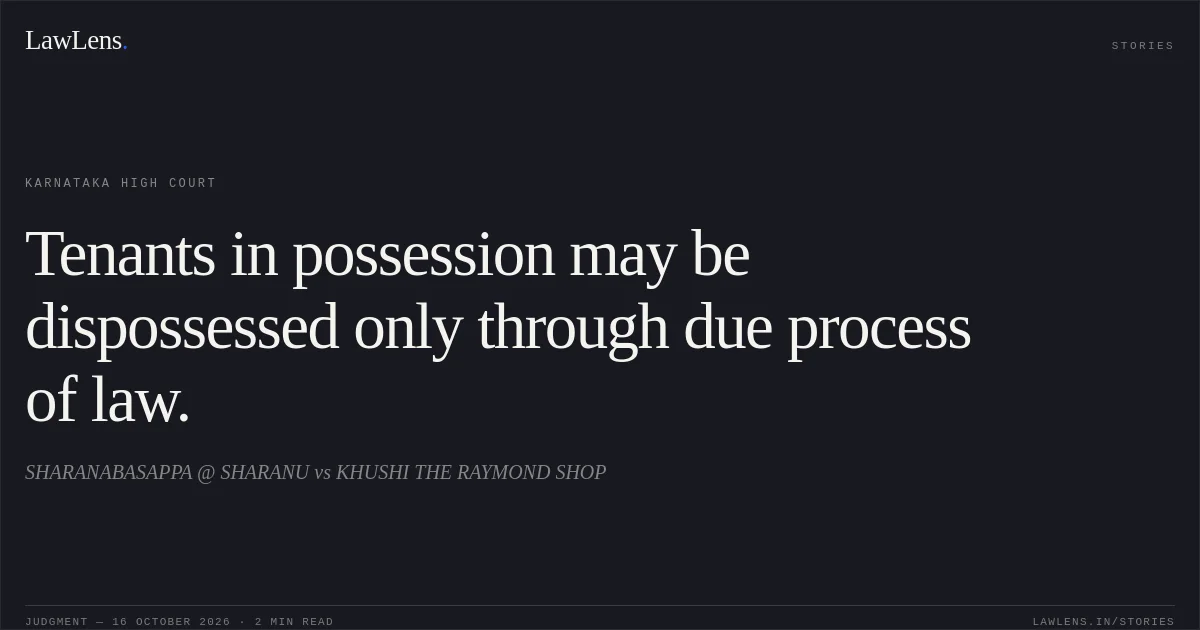
Source reference: para. 15A person in possession cannot be forcibly dispossessed and must be evicted through due process of law.
Source reference: para. 16Reasoning
The High Court treated the plaintiffs’ possession as undisputed and noted the leases and alleged attempt by defendant No. 1 to dispossess them.
Source reference: paras. 14–16Since the plaintiffs’ possession was the relevant consideration in the bare-injunction suit, and dispossession had to be pursued through due process, the courts below had properly granted interim protection.
Source reference: no citationThe petitioner’s challenge did not establish the exceptional error or manifest miscarriage of justice required for supervisory interference under Article 227.
Source reference: paras. 17–19Holding
The High Court held that the Trial Court and First Appellate Court had committed no error warranting interference under Article 227.
It dismissed the writ petition, leaving the temporary injunction in force pending disposal of the suit.
Source reference: paras. 19–20Original Court PDF
SHARANABASAPPA @ SHARANUvsKHUSHI THE RAYMOND SHOP
Click to open original judgment
Original judgment, available to read, download and summarize on LawLens.in