Facts
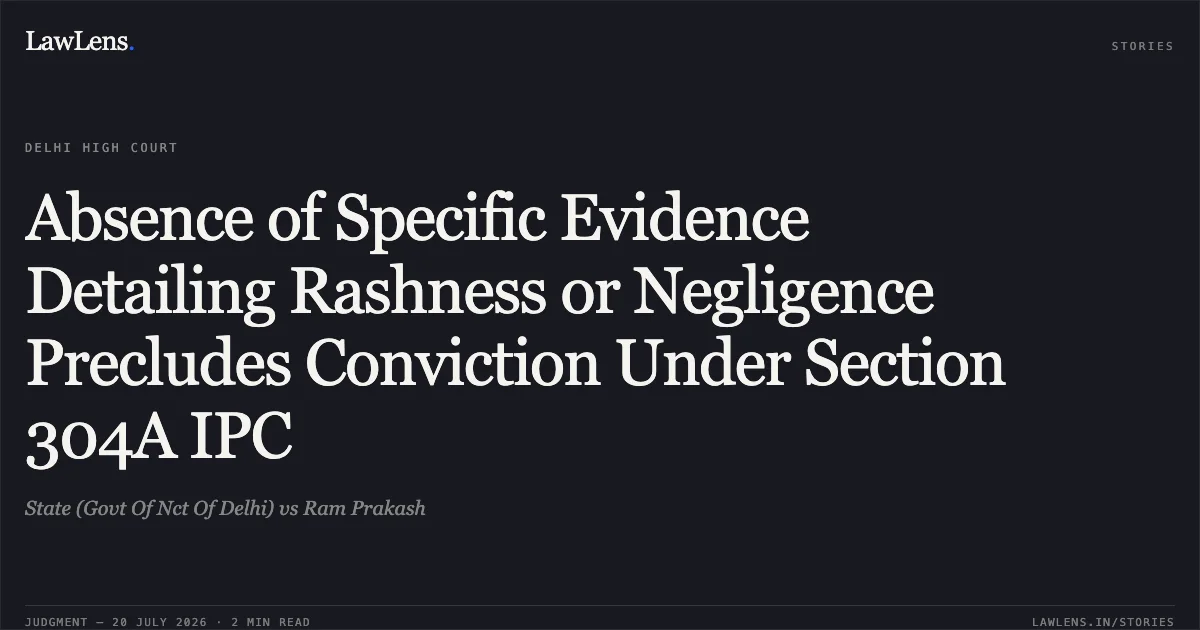
On July 4, 2011, at approximately 11:00 PM, the deceased (Vijay Lal) was riding a motorcycle with PW3 as a pillion rider near the Moti Bagh flyover. A collision occurred with a motorcycle ridden by the Respondent/accused (Ram Prakash), resulting in injuries to all parties and the subsequent death of Vijay Lal
Source reference: p.2The State filed a chargesheet under Sections 279, 337, and 304A of the IPC
Source reference: p.2-3The accused contended that the deceased was riding rashly and that both riders on the other motorcycle were intoxicated
Source reference: p.4On January 28, 2016, the Metropolitan Magistrate acquitted the accused
Source reference: p.5The State appealed this acquittal, asserting that the testimony of PW3 and medical evidence (MLCs and Post Mortem Report) sufficiently established the accused’s guilt
Source reference: p.5Issues
1. Whether there was any legal infirmity in the trial court's judgment of acquittal that warrants interference by the Appellate Court
Source reference: p.6, para. 112. Whether the prosecution successfully established the essential elements of "rashness" or "negligence" required to sustain a conviction under Sections 279, 337, and 304A of the IPC
Source reference: p.15-16, para. 18Law Applied
Sections 279, 337, and 304A of the Indian Penal Code, 1860, which require proof of criminal rashness or negligence that endangers human life or causes death
Source reference: p.13-14Chandrappa v. State of Karnataka and Babu Sahebogouda Rudragoudar v. State of Karnataka, holding that if two reasonable conclusions are possible, the appellate court should not disturb an acquittal
Source reference: p.10-12State of Karnataka v. Satish, stating that "high speed" is a relative term and does not per se establish rashness or negligence
Source reference: p.16The maxim res ipsa loquitur is generally inapplicable to criminal negligence
Source reference: p.17Reasoning
The Court observed that PW3, the sole eyewitness, provided a generic statement that the accused was driving in a "rash and negligent manner" at "great speed" but failed to explain the specific nature of the negligence
Source reference: p.16, para. 18The Court noted that the prosecution failed to establish the relative speed or provide evidence regarding the traffic signal, which PW3 admitted was functional
Source reference: p.8, 17The site plan (Ext. PW8/D) lacked critical details such as road width and the specific movements of the vehicles involved
Source reference: p.17, para. 19the prosecution failed to provide material evidence to define "high speed" in the context of the accident, criminality could not be presumed
Source reference: p.16Applying the standard of limited appellate interference, the Court found the trial court's view to be a reasonable and plausible conclusion based on the evidence
Source reference: p.12-13, 18Holding
The High Court dismissed the appeal and upheld the acquittal
The Court held that the prosecution failed to discharge its burden of proving the essential elements of rashness or negligence beyond a reasonable doubt
Source reference: p.17-18there was no "substantial or compelling reason" to reverse the trial court's findings, as the presumption of innocence was reinforced by the acquittal
Source reference: p.11-12, 18Acts & Sections Cited
2 provisions across 2 statutes referred to in this judgment. Linked provisions open on LawLens.
Code of Criminal Procedure, 19731
Indian Penal Code, 18601
Original Court PDF
State (Govt Of Nct Of Delhi)vsRam Prakash
Click to open original judgment
Original judgment, available to read, download and summarize on LawLens.in