Facts
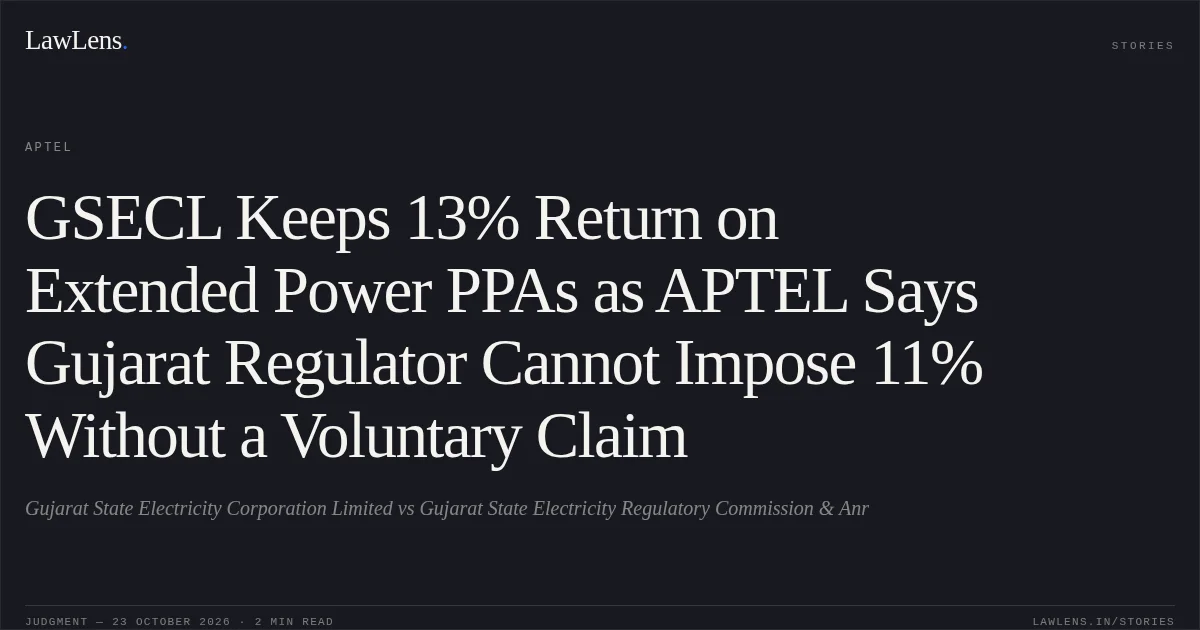
GSECL and GUVNL executed supplementary power purchase agreements (SPPAs) extending procurement from certain transferred generating stations and Wanakbori Thermal Power Station Unit 7 (WTPS-7) until 1 April 2030 or the stations’ useful life, whichever was earlier.
Source reference: pp. 5–6, paras. 7–9GUVNL sought approval of the SPPAs from the Gujarat Electricity Regulatory Commission (GERC) under Sections 86(1)(b) and 62 of the Electricity Act, 2003.
Source reference: pp. 5–6, paras. 7–9GERC had previously approved tariffs for the relevant stations for FY 2025–30, applying a 13% base return on equity (RoE) under the GERC MYT Regulations, 2024, and approved capital expenditure for the period.
Source reference: pp. 6, 16–17, paras. 10, 27, 29In its orders approving the SPPAs, GERC restricted RoE during the extended period to 11% and directed GSECL to provide an unconditional undertaking permanently foregoing the difference.
Source reference: p. 6, para. 11GSECL appealed both orders, contending that the restriction was contrary to the Regulations.
Source reference: pp. 7–10, paras. 13–19Issues
1. Whether GERC could, while approving the SPPAs, impose an 11% RoE despite Regulation 35.2 prescribing a 13% base RoE and without GSECL voluntarily claiming a lower rate.
Source reference: pp. 12, 15–16, paras. 22, 25–262. Whether GERC could depart from the 13% RoE applied in its unchallenged MYT tariff order for the same stations by imposing a different rate in the SPPA approval orders.
Source reference: pp. 16–17, 27, 30–32Law Applied
Sections 61, 62, 86 and 181 of the Electricity Act, 2003 govern tariff determination, procurement approval and the State Commission’s regulation-making authority; regulations made under Section 181 bind the Commission when it exercises its tariff powers.
Source reference: pp. 17–18, paras. 30–32Regulation 35.2 of the GERC MYT Regulations, 2024 prescribes a base RoE of 13% and permits a lower rate where the relevant licensee or generating company itself makes an unconditional claim, with the reduction permanently foregone; Regulation 35.5 provides for a 1% reduction where specified deficiencies are reported by the SLDC.
Source reference: pp. 14–15, 18, paras. 24–26, 31Under PTC India Ltd. v. CERC, (2010) 4 SCC 603, tariff orders must conform to applicable regulations and cannot override or amend them.
Source reference: pp. 17–18, paras. 30–31Reasoning
Regulation 35.2’s lower-RoE mechanism was conditional on a voluntary claim by GSECL; it did not authorise GERC to impose an 11% rate on its own initiative.
Source reference: p. 15, para. 25; p. 18, para. 31The Regulations provided no separate lower RoE for stations operating under extended PPAs or for projects that had completed their useful life, apart from the specified reduction for deficiencies under Regulation 35.5.
Source reference: p. 15, para. 25; p. 18, para. 31GERC had also applied a 13% base RoE to these stations in its MYT tariff order for FY 2025–30, which had not been challenged, and had approved capital expenditure for the same period.
Source reference: pp. 16–17, paras. 27–29Applying PTC India, the Tribunal held that GERC could not use the SPPA approval orders to depart from the binding Regulations or impose a different RoE by order; any change to the normative rate required amendment of the Regulations through the statutory process.
Source reference: pp. 17–18, paras. 30–32Holding
The Tribunal allowed both appeals to the extent that they challenged the 11% RoE restriction.
It set aside the directions capping RoE at 11%, modifying the SPPAs accordingly and requiring GSECL to give an unconditional undertaking.
Source reference: p. 19, para. 33GSECL was held entitled to the 13% RoE already determined in the MYT tariff order for the relevant stations.
Source reference: p. 19, para. 33Acts & Sections Cited
6 provisions across 1 statute referred to in this judgment. Each provision opens on LawLens.
Electricity Act, 20036
Original Court PDF
Gujarat State Electricity Corporation LimitedvsGujarat State Electricity Regulatory Commission & Anr
Click to open original judgment
Original judgment, available to read, download and summarize on LawLens.in