Facts
The respondents filed O.S. No. 107 of 2024 seeking partition and allotment of a 2/6th share, including in the ‘C’ Schedule property.
Source reference: pp. 2–4, paras. 2–7The petitioner, the first defendant, applied under Order VII Rule 11 CPC to reject the plaint, contending that the 1982 partition deed allotted that property to Rajamma for her lifetime, with absolute interest thereafter vesting in the petitioner’s father, and that the plaintiffs’ allegations of forgery did not disclose a sustainable cause of action.
Source reference: pp. 2–4, paras. 2–7The trial court dismissed the application, reasoning that the plaintiffs’ plea of fraud required evidence.
Source reference: p. 3, para. 4In the revision, the plaintiffs stated that they would bring a substantive suit claiming all appropriate reliefs; the petitioner submitted that Order VII Rule 13 CPC already permitted a fresh suit after rejection of the plaint.
Source reference: pp. 5–6, paras. 8–10Issues
Whether the trial court’s order dismissing the petitioner’s application under Order VII Rule 11 CPC should be set aside and the plaint rejected.
Source reference: pp. 2, 7, paras. 1, 14Whether rejection of the plaint would prevent the plaintiffs from filing a fresh substantive suit, and whether the defendants could raise their available grounds in that suit.
Source reference: pp. 5–7, paras. 9–13Law Applied
Order VII Rule 11 CPC governs rejection of a plaint; when considering such an application, the court is confined to the plaint’s averments and the documents filed with it.
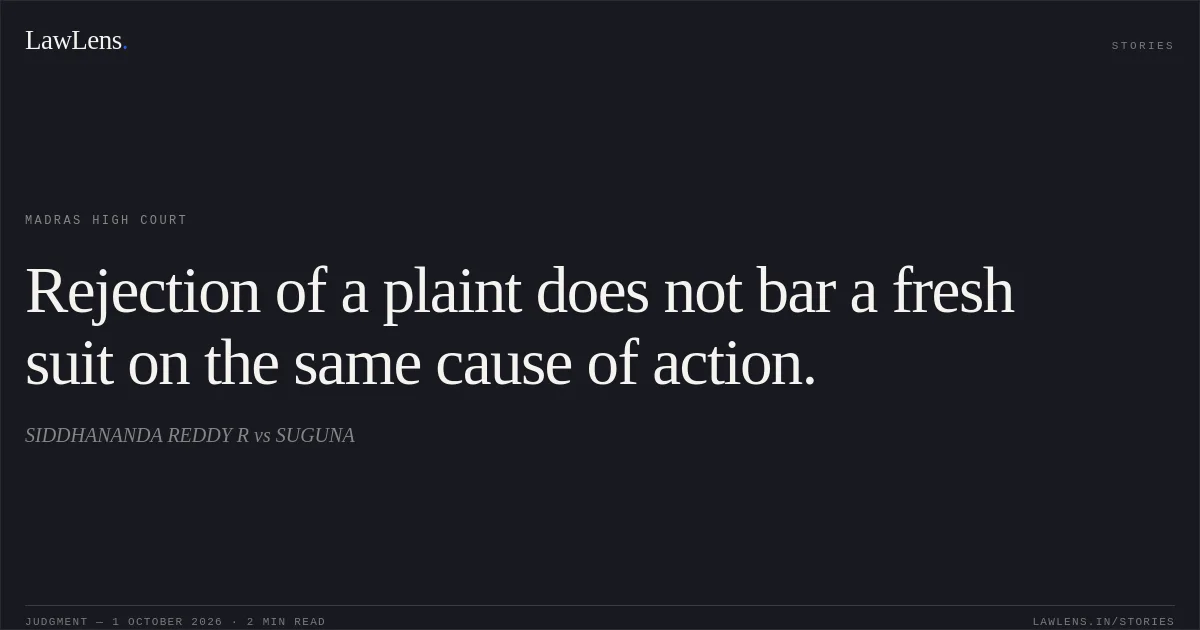
Source reference: p. 6, para. 11Under Order VII Rule 13 CPC, rejection of a plaint does not preclude presentation of a fresh plaint on the same cause of action.
Source reference: pp. 6–7, para. 13The Court also stated that subsequent developments relatable to the original cause of action may be included in a fresh suit, and that defendants may raise all available grounds for determination on their merits and in accordance with law.
Source reference: p. 7, para. 13Reasoning
The Court considered that the allegations and document discrepancies raised in the proceedings called for the plaintiffs to pursue a substantive suit seeking the appropriate reliefs, rather than having those matters determined in the revision concerning rejection of the plaint.
Source reference: pp. 5–6, paras. 8–12It reiterated that an Order VII Rule 11 application must be decided by reference to the plaint and its accompanying documents alone.
Source reference: p. 6, para. 11Since Order VII Rule 13 permits a fresh plaint after rejection, the Court left the plaintiffs free to bring such a suit and expressly preserved the defendants’ right to contest it on all available grounds.
Source reference: pp. 6–7, para. 13Holding
The Court set aside the trial court’s order dismissing I.A. No. 5 of 2024 and rejected the plaint in O.S. No. 107 of 2024.
It left the plaintiffs free to file a substantive suit and made clear that the defendants could raise all available grounds, to be decided on their merits and in accordance with law.
Source reference: p. 7, paras. 14–15The revision was disposed of with no order as to costs.
Source reference: p. 7, para. 15Original Court PDF
SIDDHANANDA REDDY RvsSUGUNA
Click to open original judgment
Original judgment, available to read, download and summarize on LawLens.in