Facts
The applicant sought regular bail regarding FIR No. 580/2025 under Section 376 of the IPC and Sections 69/351(3) of the BNS
Source reference: p. 1The prosecutrix, an air hostess, alleged she entered a live-in relationship with the applicant in 2022 based on a promise of marriage
Source reference: p. 1-2She claimed the applicant coerced her into physical relations and later became abusive while deferring marriage
Source reference: p. 2In October 2025, she discovered the applicant was already married with a child, a fact allegedly concealed by him and his relatives
Source reference: p. 2The applicant was arrested on 12.11.2025, and a chargesheet has been filed
Source reference: p. 3The applicant argued the relationship was consensual and that the prosecutrix, being educated, likely knew of his marital status
Source reference: p. 3-4Issues
1. Whether the applicant is entitled to regular bail considering the allegations of sexual intercourse obtained through deceitful assurance of marriage under Section 69 of the BNS
Source reference: p. 52. Whether the consensual nature and duration of the relationship, coupled with the completion of the investigation, warrant the release of the applicant pending trial
Source reference: p. 3, 5Law Applied
The court applied Section 483 of the Bharatiya Nagarik Suraksha Sanhita (BNSS), 2023, regarding bail
Source reference: p. 1Substantively, it considered Section 69 of the Bharatiya Nyaya Sanhita (BNS), which criminalizes sexual intercourse by "deceitful means" or a promise to marry without intention to fulfill it, and Section 376 of the IPC
Source reference: p. 1The court relied on the principles for bail established in Manik Madhukar Sarve v. Vitthal Damuji Meher (2024) and Zeba Khan v. State of U.P. (2026), focusing on the gravity of the offence and the risk of witness intimidation
Source reference: p. 5It further referenced Samadhan v. State of Maharashtra (2025) regarding the distinction between a breach of promise and a false promise made in bad faith to exploit a woman
Source reference: p. 7Reasoning
The court rejected the applicant's contention that the prosecutrix’s education and the three-year duration of the relationship automatically implied informed consent
Source reference: p. 5It noted that the prosecutrix maintained a consistent stance of being unaware of the applicant’s existing marriage, and the applicant did not deny the sexual relationship while being married
Source reference: p. 5-6The court reasoned that since the charges were yet to be framed, granting bail would be premature
Source reference: p. 6Distinguishing the precedents cited by the applicant, the court found that unlike Samadhan, there was no evidence here that the prosecutrix had ever refused marriage; rather, the applicant allegedly actively concealed his marital status to obtain consent
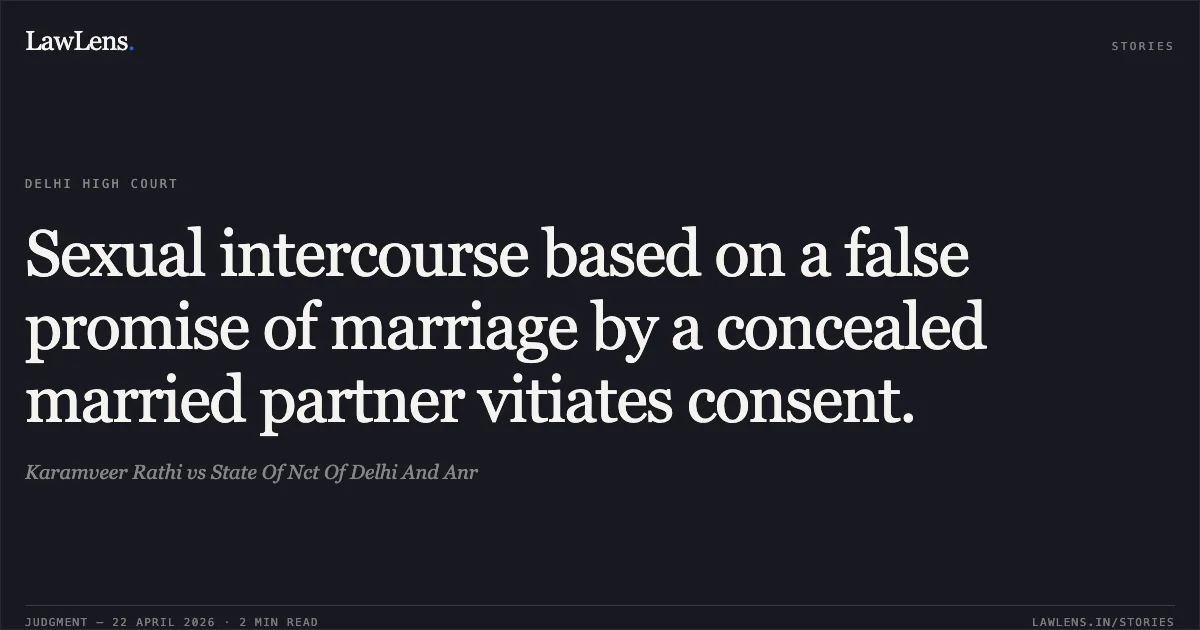
Source reference: p. 6-7The court emphasized that a promise of marriage becomes the "foundation of consent," and if made in bad faith to exploit, it vitiates that consent
Source reference: p. 15Finally, the court noted the risk of witness intimidation given the applicant's alleged prior threats
Source reference: p. 5, 8Holding
The court held that the applicant failed to make out a case for regular bail at this stage due to the serious nature of the allegations involving deceit, physical assault, and intimidation
The court clarified that the indulgence in a sexual relationship while concealing a marriage does not inspire confidence for the grant of bail during the nascent stage of proceedings
Source reference: p. 6Consequently, the bail application was dismissed
Source reference: p. 8Acts & Sections Cited
4 provisions across 3 statutes referred to in this judgment. Each provision opens on LawLens.
Bharatiya Nagarik Suraksha Sanhita, 20231
Indian Penal Code, 18601
Bharatiya Nyaya Sanhita, 20232
Original Court PDF
Karamveer RathivsState Of Nct Of Delhi And Anr
Click to open original judgment
Original judgment, available to read, download and summarize on LawLens.in